
A Hardening of the Categories
Respected professor Howie Hendricks knew that over time we can develop a “hardening of the categories.” It’s not just our arteries we need to worry about.
Let’s continue to learn from the perspective of others through these periods of historic crises. Let’s hold back from know-it-all arrogance and open wide the door of humility. Yes, our world needs changing, but let it start with us.
Remember the “we’re all in this together” slogan from just a few months ago?
How quickly we’ve seemed to drift from that aspiration, as social unrest takes the spotlight, on top of COVID’s physical and economic toll.

This familiar passage comes to mind again as our land is in desperate need of healing:
If my people, who are called by my name, will humble themselves and pray and seek my face and turn from their wicked ways, then I will hear from heaven, and I will forgive their sin and will heal their land.
2 Chronicles 7:14 (NIV)
It’s in our nature to dig in our heels and point to the shortcomings of others, becoming more dogmatic and self-righteous in our own opinions. We want others to humble themselves and turn from their wicked ways. But this passage asks for us to humble ourselves, to pray, to diligently seek God’s face, and to turn from our own wicked ways.
Respected professor Howie Hendricks knew that over time we can develop a “hardening of the categories.” It’s not just our arteries we need to worry about.
Let’s continue to learn from the perspective of others through these periods of historic crises. Let’s hold back from know-it-all arrogance and open wide the door of humility. Yes, our world needs changing, but let it start with us.
The first half of this year has been incredibly tumultuous and challenging. It’s also a season of opportunity if we personally follow this 2 Chronicles prescription for personal forgiveness and healing on a national scale.
God gave us two knees, two ears and one mouth. Let’s be quick to pray, listen and learn—slower to speak.
May God lead us personally down this humble, less-traveled road and bring healing to our land.
Fruitful in the No-Go Season
The Apostle Paul talked about finding contentment in whatever state he found himself, even in a no-go prison environment. But it wasn’t a passive, do-nothing state of contentment … he persevered in hugely significant ways during these times of confinement—writing powerful, world-impacting prison epistles that have helped bolster faith for two millennia.
“Unprecedented within our lifetime.”
Collectively, we’ve never experienced such a sudden jolt in our economy and lifestyle, moving from on-the-go to no-go in a matter of days. Now communities and states struggle to find the right slow-go mix to safely lead us back to a vibrant, on-the-go economy.
On a personal scale, though, many older adults have already experienced all three of these paces. Adults in life’s second half commonly move sequentially from on-the-go (robust health) to slow-go (pre-frail) to no-go (frail) lifestyles.
Yet, we have seen people live purposeful lives in each of these stages. Key ingredients include acceptance, patience and resilience.
The Apostle Paul talked about finding contentment in whatever state he found himself, even in a no-go prison environment. But it wasn’t a passive, do-nothing state of contentment … he persevered in hugely significant ways during these times of confinement—writing powerful, world-impacting prison epistles that have helped bolster faith for two millennia.
Homebound adults, who have already faced restricted physical mobility and a loss of driving privileges, have plenty to teach us during this pandemic.
Instead of just being ‘okay under the circumstances’, many invite God to lead them to extreme fruitfulness. Content, but also active and purposeful.

We love how God spoke to June Mills through our Young Enough to Serve challenge in Alaska, returning to Arizona and immediately starting a sewing ministry from her home …. still going strong five years later at 95 years young.
May we all ask God for a spirit of contentment, patience and resilience during this time.
Some of you reading this don’t expect to transition back to an on-the-go lifestyle this side of heaven. Thanks for showing us that God can still be at work in and through your lives, in whatever state you find yourselves.
It’s Time for Seniors to be More Than ‘Vulnerable’
It really bothers me that 50 million or more Americans are being painted with a single, pitiful brush stroke, no matter how well intentioned it may be.
Well, this is our senior moment! I want to replace that mantra with a challenge to all seniors: Be more than vulnerable, and do more than nothing.
“Those old people are really vulnerable right now.”
I’m 78 years old, and I must have missed the memo because -- despite what everyone is telling me -- I don’t feel ‘vulnerable.’
The media’s mantra is something like this: “We want to thank the first responders, doctors, nurses and hospital workers who are so dedicated and keep all of us safe… it’s so vital that we protect our most vulnerable.”

They don’t need to say it. Everyone knows that the most vulnerable are us old folks.
It really bothers me that 50 million or more Americans are being painted with a single, pitiful brush stroke, no matter how well intentioned it may be.
Well, this is our senior moment! I want to replace that mantra with a challenge to all seniors: Be more than vulnerable, and do more than nothing.
I don’t claim there aren’t vulnerable seniors. There certainly are. Yes, most of us have health issues as we grow older. But health issues do not mean we automatically turn into helpless, dormant and irrelevant figures, barely shuffling from the bedroom to the armchair for another nap.
While not every teenager should be on suicide watch, not every senior is feeble, frail, weak, and irrelevant. Far from it. Retirees could live another 30 years in their “post-working” life -- and, for many, those years are an active time when we want our lives to count for something worthwhile, something noble, something better, and totally relevant.
The unintended consequence of the “vulnerable” message could turn out to be devastating. Characterizing seniors as vulnerable will leave a flawed emotional legacy -- not only for this generation of seniors but for the next, and the next, and the next.
We all -- seniors included -- need meaning and purpose, a vision to make a difference and bring hope to others. When that vision, that purpose, is taken away, we curl up and die inside.
A recent survey by the American Psychiatric Association tells us 48 percent -- almost half -- of Americans are worried about getting the coronavirus. Meanwhile, 40 percent are worried about dying from the virus. And 62 percent are anxious about a friend or family member becoming infected.
But perhaps the biggest surprise is the high anxiety level among young people, including teenagers anxious about their future. They don’t have the life experience, perspective, or wisdom that comes with age. The unknowns of a terrifying experience can only be calmed by the reassurance of a trusted messenger. This reasoned assurance from someone older and more experienced, who’s been through crises before, is critical to reducing fear, lessening anxiety, and pointing to a brighter future. We are, by sidelining seniors, wasting the opportunity to tap into this deep well of experience and wisdom.
That’s why today I’m sounding the alarm by issuing the COVID-19 Senior Challenge. My challenge to America’s elders is this: Be more than vulnerable and do more than nothing.

Too many of us are huddled in our homes or apartments, inwardly focused, scared and alone, convinced that we are “next.” There is the unexpressed fear of being -- and dying -- alone while nobody cares. This is not a plea for someone to care, although that is worthy, but a challenge to seniors to look outward and embrace the major precepts of the Retirement Reformation movement and its manifesto and apply them to our current situation.
What are those precepts? Seniors can make a difference in the lives of our families, friends, churches, and communities. We can move beyond immobile to motivated, from irrelevant to vitally important. These are the sirens of the Retirement Reformation movement -- the call to shake off the label of “vulnerable victim” and put on the mantle of “hero” instead.
I urge America’s seniors to embrace the COVID-19 Senior Challenge and join our national movement of radical reformers who refuse to sit idly in our rocking chairs and watch the world define who they think we are.
We are not helpless victims. We are not vulnerable. We are survivors and overcomers. And we will show the younger generations that we are relevant, we are brave -- and we have a future, too.
Bruce Bruinsma is the founder and leader of The Retirement Reformation movement and the author of the book by the same title. The Retirement Reformation (www.retirementreformation.org) aims to shake up America’s laid-back retirement culture and launch a new wave of mission-driven seniors into service.
Spiritual Applications of COVID-19
Charlotte shared these devotional thoughts at a recent YES! board meeting. Gary & Charlotte are on a missionary assignment in Japan, and Gary serves on the YES! board of directors. With our shared global pandemic experiences, Japan suddenly seemed closer and less foreign on this last Zoom call … We’re in this together.
(Charlotte shared these devotional thoughts at a recent YES! board meeting. Gary & Charlotte are on a missionary assignment in Japan, and Gary serves on the YES! board of directors. With our shared global pandemic experiences, Japan suddenly seemed closer and less foreign on this last Zoom call … We’re in this together.)
By now, we’re all aware of COVID-19 best-practice PHYSICAL guidelines:
Washing hands
Wearing face masks
Staying sheltered
Essential workers
Outcomes
But let’s take a moment to consider SPIRITUAL parallels:
1. Wash hands- clean hands/pure heart

● Ps 24:3-4 AMP “Who may ascend onto the mountain of the LORD? And who may stand in His holy place? He who has clean hands and a pure heart, Who has not lifted up his soul to what is false, Nor has sworn [oaths] deceitfully. He shall receive a blessing from the LORD, And righteousness from the God of his salvation.”
Clean hands will not allow themselves to be used to commit sinful actions, or to put sinful thoughts (when they occur) into effect.
2. Face mask- Studies show most benefit comes from keeping our mouth from infecting others, causing us-to-others contamination.

● Proverbs 13:3; “Whoever guards his mouth preserves his life; he who opens wide his lips comes to ruin."
● Ephesians 4:29; "Let no corrupting talk come out of your mouths, but only such as is good for building up, as fits the occasion, that it may give grace to those who hear."
3. Stay sheltered

● Psalms 27:1 The LORD is the stronghold of my life-- of whom shall I be afraid?
● Psalms 91:1-6 “Whoever goes to the LORD for safety, whoever remains under the protection of the Almighty “can say to him, “You are my defender and protector. You are my God; in you I trust.”” He will keep you safe from all hidden dangers and from all deadly diseases. He will cover you with his wings; you will be safe in his care; his faithfulness will protect and defend you. You need not fear any dangers at night or sudden attacks during the day or the plagues that strike in the dark or the evils that kill in daylight.”
● Psalms 46:10 BE STILL and know I am God..
And then it’s time to take a deep breath and slow down—get an overall picture, and maybe we want to consider what we want to fill our lives with.
4. Essentials- Let’s keep the main things the main thing

● Luke 10:42 Jesus to Martha, ”You’re troubled by many things, only one thing is necessary.”
WORSHIP at His feet. Seek first the kingdom.
● Matthew 6:31-34 GNB ““So do not start worrying: ‘Where will my food come from? or my drink? or my clothes?’ (These are the things the pagans are always concerned about.) Your Father in heaven knows that you need all these things. Instead, be concerned above everything else with the Kingdom of God and with what he requires of you, and he will provide you with all these other things. So do not worry about tomorrow; it will have enough worries of its own.
5. Outcomes that we’re striving for::
● Spiritual health/wellness/wholeness
● New ways of living, new perspective
● Becoming thoroughly equipped to do what God has called us to do
● Ready to go out
Colossians 3:12-17 We clothe ourselves with compassion, kindness, humility, gentleness and patience. We bear with one another, and we forgive each other, if there is any offense between us. We forgive each other as the Lord has forgiven us. And over everything we put on LOVE, which binds us all together into a Perfect unity.
The PEACE of Christ rules in our hearts, which we are all called to because we are members of each other in the same Body. And we are THANKFUL! We let the Word of Christ dwell among us richly. We teach and encourage one another with all wisdom. Through psalms, hymns and spiritual songs, we sing with gratitude in our hearts to the Lord.
Whatever we say or do, we do it all in the Name of our Lord Jesus Christ, giving thanks to God the Father through Him.”
Bottom Line: How/what we do may change through this pandemic and at other seasons of life, but our motivation/focus remains the same: All glory to Jesus.
Pray It Forward
For some, this gift will help put food on the table or help pay rent for another month.
For others, it's a gift that is appreciated but not critical for survival.
We invite you to pray about how you might steward this gift.

This week many of us will receive a stimulus check, designed to help us through this current crisis.
We didn't ask for the pandemic, and we didn't necessarily ask for the financial gift. But there it lands, in the mail or as a direct deposit to our account.
For some, this gift will help put food on the table or help pay rent for another month. For others, it's a gift that is appreciated but not critical for survival.
We invite you to pray about how you might steward this gift. Minimally, we hope you will give a tithe to your local church. A tithe reminds us that it's God's money, not ours.
This is a challenge we are presenting to ourselves, too. Not a guilt trip, but an invitation to open our hearts and resources to others in this time of crisis.
After tithing, our plan is to create a personal Generosity Account that we can tap into in the months ahead to bless others.
Obviously, for those in a world of hurt from this horrific virus, this gift will help meet personal needs and financial obligations.
If this crisis has had little impact on your bottom line, prayerfully consider how you might bless others with this gift.
It may be a family member, a neighbor, your church, a young family without a current breadwinner, a food bank, or a host of other organizations providing frontline support.
God may prompt you to buy something for yourself or to hire someone to help you with a need. Buying from or employing others can certainly be a real way of answering the prayers of others, too.
Again, let God direct you/us. Pray it forward.
With Fear and Great Joy
It’s amazing how certain phrases command our attention when life circumstances change. The Word hasn’t changed, but our conditions sure have.
While we’re in a season fraught with very real coronavirus fears, let’s keep our hearts open. We like how Matthew uses the word ‘great’ to describe the joy, and fear has no enhancing descriptor. God still wants to show up with great-joy surprises—greater than our fears.
These words jumped out more than once as we participated in multiple online services over Easter weekend.
It’s amazing how certain phrases command our attention when life circumstances change. The Word hasn’t changed, but our conditions sure have.
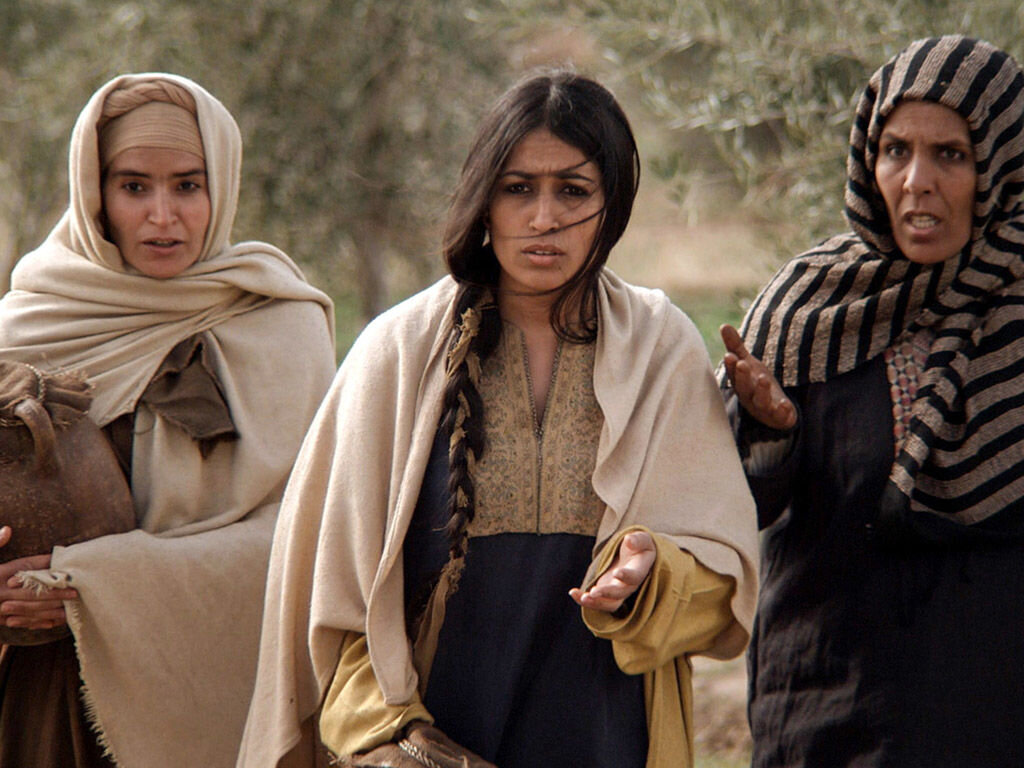
Because we know how the story ends with Jesus’ resurrection, the raw and conflicting emotions of Passion Week may sometimes escape us. Even on Easter Sunday, the great day of triumph, Gospel writers Matthew and Mark still acknowledge fear’s presence as the women left the empty tomb with great joy to share this news with the disciples, who were also hunkered down in fear.
And they left the tomb quickly with fear and great joy and ran to report it to His disciples. Matthew 28:8 (NASB)
They went out and fled from the tomb, for trembling and astonishment had gripped them; and they said nothing to anyone, for they were afraid. Mark 16:8 (NASB)
Right now, in the middle of a pandemic, fear is common. We don’t know how the days, weeks, months and even years ahead will unfold. We’re confident that COVID-19 will eventually be contained. But we don’t know the extent of the physical, economic, and emotional toll ahead, generally or personally.
While we’re in a season fraught with very real coronavirus fears, let’s keep our hearts open. We like how Matthew uses the word ‘great’ to describe the joy, and fear has no enhancing descriptor. God still wants to show up with great-joy surprises—greater than our fears.
Charles Dickens’ epic line from the Tale of Two Cities comes to mind. “It was the best of times, it was the worst of times.” Some things like air quality and traffic have never been better. Some families are experiencing tremendously rich times that will be remembered and treasured.
But many are facing danger, severe illness, financial devastation, uncertainty, physical and emotional exhaustion, and death.
Can we acknowledge that it’s okay in the present for fear and great joy to co-exist?
Just know, in the end, joy wins.
… Because of the joy awaiting him, he [Jesus] endured the cross, disregarding its shame. Now he is seated in the place of honor beside God’s throne. from Hebrews 12:2 (NLT)
The Pandemic's Far-Reaching Breadth
We join with you in prayer during this very troubling season. Let not our hearts be troubled!
Yes, we’re all in this together, but what a broad swath of life experiences!
Yes, we who are older and more susceptible to this virus’ physical wrath must take special precautions. But younger generations are also experiencing extreme challenges that we’re not facing.
We join with you in prayer during this very troubling season. Let not our hearts be troubled!

Yes, we’re all in this together, but what a broad swath of life experiences!
· Some with COVID-19 are without symptoms, while others fight for their last breath.
· For some, life’s pace has come to a jarring halt, while others are busier than ever.
· Some face financial ruin; some have little economic worry.
· Certain cities are corona-hotspots, while some vicinities remain less catastrophic so far.
· Most adults over 65 are extra-vigilant about staying home, while retired medical professionals boldly re-enlist for frontline care.
· Some families are experiencing rich times of togetherness; some are stressed to the max.
· Many wonder if they can survive this crisis. Others ask God how they might grow and thrive through this pandemic.
For now, we’ve become a nation of shut-ins and homeschoolers. “Welcome to my world,” some of you stay-at-home moms and homebound older adults might say, appreciating the empathy.
Those of us in the ‘low-immunity community’ are being treated with unusual grace and deference. We’re so grateful for the sincere concern expressed and practical help offered. We love how younger people want to shield us from this deadly virus.
At the same time, we hope we can use this unique season to bless every generation, not just our own.
Yes, we who are older and more susceptible to this virus’ physical wrath must take special precautions. But younger generations are also experiencing extreme challenges that we’re not facing.
Through it all, we pray that we’ll re-discover God’s faithfulness and still see ourselves as young enough to reach out with servants’ hearts.
Shortcuts
In spiritual and church realms, shortcuts should have a warning label attached. Sometimes they cut God, others, and ourselves short.
Our hearts grieve when we see churches snubbing older adults in their efforts to reach younger generations. We know spiritual health/impact and sustainable faith are diminished when we treat any living generation as irrelevant and dispensable.
Shortcuts. Good or bad?
We love discovering shortcuts that trim travel time or help accomplish tasks more quickly. And it’s fun passing these shortcuts on to friends who genuinely appreciate the new efficiencies.
But in the spiritual and church realms, shortcuts should have a warning label attached. Sometimes they cut God, others, and ourselves short.
Our hearts grieve when we see churches snubbing older adults in their efforts to reach younger generations. We know spiritual health/impact and sustainable faith are diminished when we treat any living generation as irrelevant and dispensable.
Ageism crushes the spirit and can lead to self-fulfilling prophecies. People treated as irrelevant can lose confidence and actually become less visible and relevant.
We’re also disappointed when older Christians skirt around the need to interact with younger people.
In our most recent YES! board meeting in Arizona, we engaged leaders in their twenties, thirties, forties, fifties, sixties and seventies. It’s hard to put into words the difference this generational breadth makes as we plan for this new year and beyond. Truly amazing and inspiring!
Our peer-only attempts to reach those younger and those older often highlight shortcut shortfalls.
Engaging all generations requires extra work and determination, but it is certainly worth the effort. It also reflects God’s design for His Church: the interdependent body of Christ and the family of God.
Titus 2 affirms the invaluable role older adults can have in the life of the Church, but imagine how limited that role would be if we take Titus and other young people out of that chapter. And conversely, imagine young Titus shortcutting the elder Paul’s instruction by refusing to incorporate older men and women in his outreach to those younger.
Let’s pray for more young leaders to teach those older to reach those younger! So long, Shortcuts!
2020!
… such a clean number to accompany countless invitations to fresh, new beginnings. An annual marker this symmetrical won’t come around again in our lifetime.
May this new decade bring out the best in all of us, and may God divinely lead us to something new!

It’s here. A new year and a new decade.
2020, such a clean number to accompany countless invitations to fresh, new beginnings. An annual marker this symmetrical won’t come around again in our lifetime.
While the year is new to us, we know we’re not starting over with a completely new slate. We’re privileged to carry over many good things, including wisdom and experience, from prior decades.
And we also face some of the same challenges from our 2019 plate. These challenges didn’t all magically vanish when the Times Square ball dropped at midnight.
We want to eagerly embrace the new, while still appreciating what’s old. Let’s work on both sides of the equation, not just giving a hearty amen to that sentence’s second half. While we may affirm that we who are older deserve more respect and appreciation, let us, too, find room to eagerly embrace what’s new.
We don’t want to be older-adult equivalents to K-Mart. :)
(That tired store is closing in our hometown and in many other U.S. cities. A host of other past-era retail relics didn’t adapt so well to changing times. Our advance apologies to any K-Mart loyalists.)
We know we’re inclined to resist what’s new, especially as we grow older. But remaining open to what’s new helps us stay more relevant and needed—often less needy.
Remember, the ancient, elder-honoring Scriptures we’ve grown to embrace also include admonitions to:
· Sing to the Lord a new song,
· Not look down on young leaders because of their youthfulness,
· Welcome God’s all-things-become-new transforming touch.
May this new decade bring out the best in all of us, and may God divinely lead us to something new!
Sometimes No Answers
Shani and I looked at each other but exchanged no words. I held her hand as Dr. Curran came in with a quiet ‘Good morning’—not his usual sunny greeting. He connected the new device and sat close for a listen.
“Sometimes there are no answers for this.”
Twenty years ago today on a bright Thursday morning, Shani and I set out to Fairview Southdale Hospital for her scheduled C-Section. Two days earlier she experienced intermittent cramping and visited the clinic, where she received an “all clear” and was sent back home.
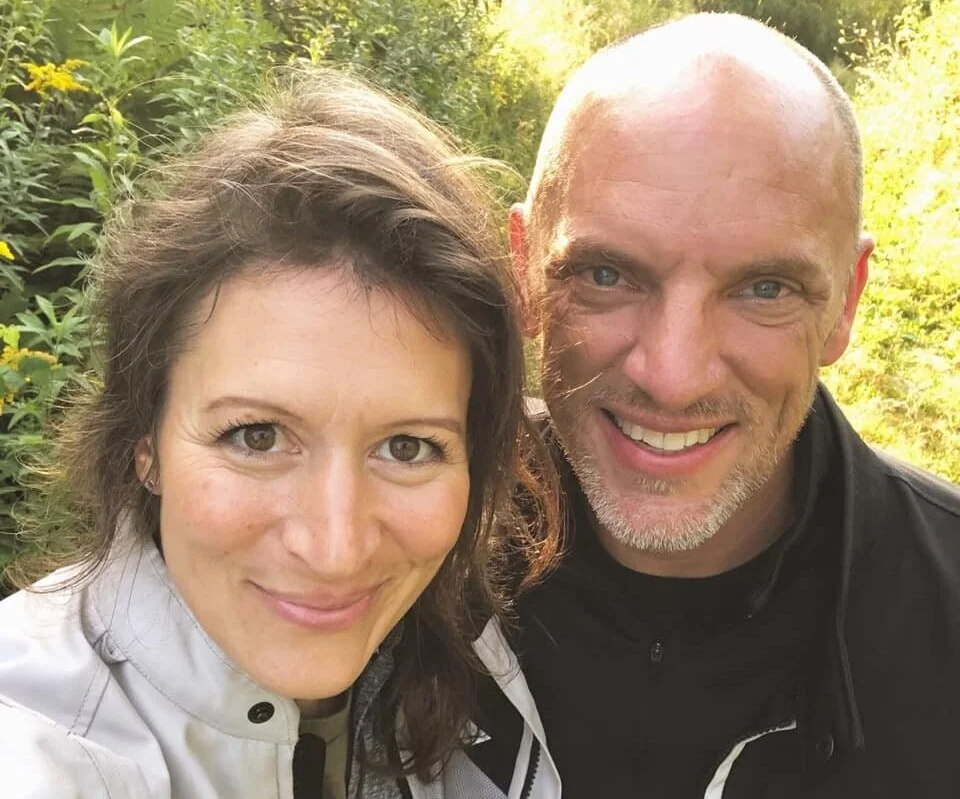
As the registration staff checked us in, Shani became increasingly uncomfortable. After visiting the restroom before triage, she exited saying, “I think my water just broke.”
Responding with a reassuring smile, the nurse directed us into a prep room, where Shani changed into a gown and vital signs were taken. I found a chair next to her, while the nurse pulled out the baby monitor and placed it on Shani’s belly.
Swipe, check, swipe …. no heartbeat. No words. Swipe, check, swipe …. no heartbeat.
“I’ll be right back,” the nurse stated. “I’ll grab another machine and have Dr. Curran take a listen.”
Shani and I looked at each other but exchanged no words. I held her hand as Dr. Curran came in with a quiet ‘Good morning’—not his usual sunny greeting. He connected the new device and sat close for a listen.
Swipe, check, nothing .... no words. Swipe, check, nothing.
He slowly turned off the machine, turned to Shani and grabbed her right hand while I had her left. “I’m so, so sorry,” he said.
Shani looked at me as tears streamed down the sides of her face. She seemed to melt into a deep, silent cry. Dr. Curran began to tell us how things might proceed. “Sometimes there are no answers for this,” he said.
Shani would for the first time deliver naturally, as Forest and Addy both entered the world by C-Section.
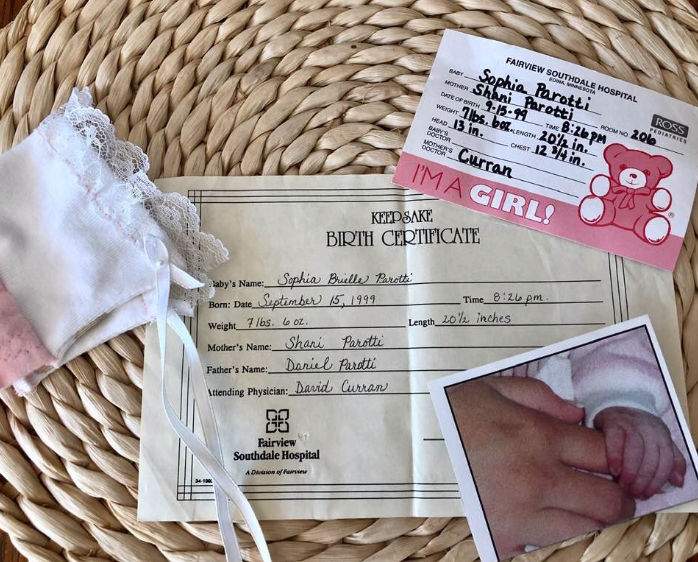
Sophia Brielle was born a perfectly formed seven-pound baby in a room full of somber doctors and nurses, who gently coached and nurtured us through the most painful moments of our life.
Dr. Curran’s face was flooded with tears as he handed Sophia’s little body to the nurse, who wrapped her in a blanket and simply swayed, rocking her.
Time seemed to slow down in the hours and days that followed as we listened and looked in the faces of doctors, family, friends, and pastors to reference how we should proceed, and how we should feel.
“Sometimes there are no answers for this.”
We were compassionately guided through each step of letting go of our baby, and the most dreaded, inevitable step of planning her funeral. Most of that process is a blur except for a few details. One is that Shani wanted Sophia to be buried in an outfit that she wore as a newborn. The other was that I would sing “It Is Well.” Many of you know the story of that song’s author, Horatio Spafford, who wrote it after discovering all four of his daughters died in a shipwreck.
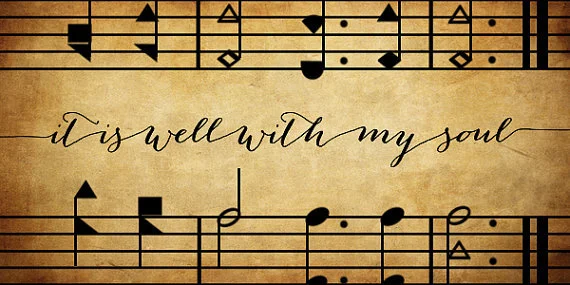
The irony of choosing that song is baffling, as we certainly felt no peace in those first days, struggling to reconcile a God who was still good to us even though He had allowed our daughter to die the day before her delivery.
But I will say, there came a point for Shani and me both—in our own timing—when we chose to lean back into Him with trust and surrender—even though “sometimes there are no answers for this.”
Through months of healing, and in the years that followed, we have been able to experience and attest to God’s goodness.
And it is because of Him, when there are no answers, we can sing, “It Is Well.”
Now, twenty years later, I’ve had the blessing of recording that song as part of a compilation of meaningful and sacred songs. It’s still a painful memory, but it is truly well with my soul.
___
Dan will be sharing that song and others at their seniors’ luncheon in Minnesota on September 26th. In addition to serving as pastor to senior adults at Cedar Valley Church in Bloomington, Dan is a valued member of the YES! Young Enough to Serve Board of Directors. (His recently released album, available on Amazon, ITunes, and Google Play, also features Sara Graves and Stephanie MacDonald.)
God-Orchestrated Sidewinders
God can use every detail of our lives for His glory if we will cooperate and lean into His plan. An out-of-place back and an old gospel song led to a series of unexpected miracles.
Some of God’s best work may occur during these unplanned sidewinders, on the road to our destination. Stay alert, and appreciate the journey!
Several months ago, my husband Art and I began preparing for our annual “escape-the-Arizona-heat-to-cooler-California” trip. This RV trek typically combines a family reunion at Carpinteria, then several friends & family visits up the coast until we reach the Santa Cruz redwoods.
There, our dear friends, Wes and Judy Wick, carve out a place on their beautiful property for us to park our rig for a week. Precious times—full of laughter and prayer. This yearly trip usually coincides with a YES! trip to San Francisco City Impact, another summer highlight.

By the way, I’m tall. The phrase, “The bigger they are, the harder they fall” is true. You might say I’m vertically challenged. Due to odd mishaps here and there, combined with neck and back strain, my body reminds me to stay on good terms with my chiropractor.
Before our departure, my chiropractor visit fell to the end of my to-do list and never happened. Several more setbacks, including RV head bumps and an unfortunate back twist, reinforced my chiropractic need. The final blow came when I succumbed to my husband’s need to fill a bracket and play in our family’s annual bocce ball contest. That did it.
I woke up the following (Monday) morning in extreme pain. Several desperate phone calls to various local doctors proved futile. The next town on our northbound trek was Paso Robles, so I expanded my online search. On my first call to a random and unknown office, the chiropractor himself answered and confirmed he had time for a morning appointment.
About an hour later, I was in a beautiful business busily filling out necessary paperwork. I heard unusual music drifting faintly from the office speakers—old-time gospel music that I grew up with and hadn’t heard for a long while.
“Your music is a surprising choice for a doctor’s office,” I commented to the receptionist. “Who selects the station?” The receptionist responded, “Well, the doctor asks that I play Christian music but today I chose this genre … it calms me.” I asked if she, too, grew up listening to this kind of music. “No, I grew up Church of Christ, where musical instruments were excluded from worship.”
“So, where do you attend church?” I inquired. “I don’t,” she replied.
“I grew up with strict rules and people’s strong opinions that caused me to reject the idea of church. For a while, to marry my husband, I joined the Catholic church and we raised our kids there, but now my husband won’t go and won’t read his Bible. We stopped going to church years ago. I just believe that I don’t need church or anyone else’s opinions to find God. I do read the Bible on a Bible app, but attend church, no.”
This began my soft probing about how important it is to be a part of a body of believers that shares our faith, with friends to walk alongside who support us in prayer. “We were never intended to do life on our own,” I reminded her.
Transitioning to their back office to sign more paperwork, the door closed behind us. This sweet office employee began to pour out her heart. Without saying it in actual words, she was clearly in a lot of emotional pain. Before this pre-appointment segment concluded, we joined hands. I prayed for her, asking God to reveal Himself, comfort her and lead her to a nurturing group of believers. I let her know that God had arranged a lot of “random” details for us to rendezvous … and He used her music selection to fan the flame.
I then met the chiropractor and learned that his name is Tige R. Griffin. He is a friendly, energetic 40ish-looking doctor and very soon we began to chat and connect like old friends. His office-music selection had already tipped me off that he was likely a believer. He confirmed that he indeed was a Christ-follower and shared that he and his family attend Atascadero First Assembly. His former pastor was an old college friend of mine. A very small world.
“What?!” we both exclaimed. He asked me what brought us up that way from Arizona. I told him of our summer and how we were en route that day to Santa Cruz, then concluding our trip Saturday with ministry in San Francisco.
“Would that possibly be with City Impact?” he asked. The doctor responded with another astonished, high-pitched ‘What?!’ as I confirmed.
“I’m joining some guys from my church for my first SF City Impact trip.” We talked about what to expect and left that subject with the hope that perhaps we would see each other there—a pretty unlikely scenario, considering close to a couple thousand volunteers are involved annually at the City Impact conference.
I also introduced him to the ministry of YES! Young Enough to Serve and explained our mission. With excitement he said, “That’s it! … my wife and I want to minister together as we get older. I didn’t know a ministry like this exists!”
Thankfully, the chiropractor’s adjustment came next. God sent me to a guy who knew his stuff! He skillfully and gently put my back and neck into alignment. For the first time in weeks I began moving without pain.
Before leaving I cautiously divulged that I had shared with his receptionist and that she had allowed me to pray for her. I relayed that she really needed Jesus and someone to come alongside her. The doctor and I then prayed for her salvation, her family, and whatever else she was in need of. He prayed for my back, and we also prayed that our trip to City Impact would be impactful.
On my way out of the office I hugged the receptionist once more and let her know that I was careful in what I had shared, but I had told her boss that she was struggling, needed Jesus, and a support group. She thanked me and I was on my way, feeling a lot better physically. I also left knowing for sure that God had orchestrated the music and ensuing conversations. He had even used my nagging back pain to direct my steps on what initially seemed like an unwelcomed detour.
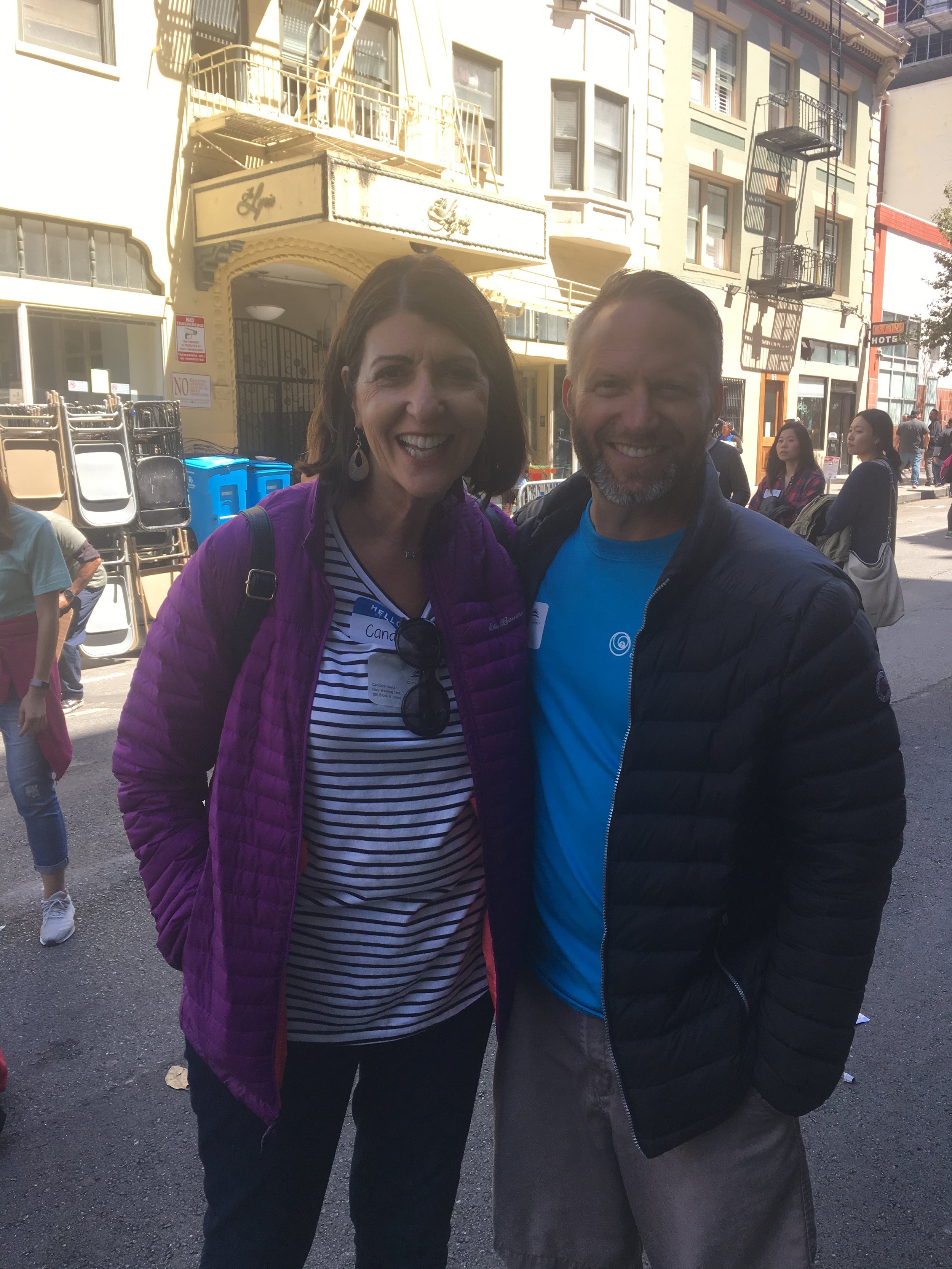
Candace and her favorite Paso Robles chiropractor on the streets of San Francisco.
As that week ended, a group from YES! headed to San Francisco’s Warfield Theater in the Tenderloin District, where volunteers first gather for worship and teaching before ministering on the streets. Just as we were about to enter the auditorium, we ran into my new chiropractor friend. I had the opportunity to introduce Tige to my husband, Art, and Wes and Judy. We talked about the goodness of God’s direction to bring us all together.
The doctor then said, “I can’t wait to tell you the rest of the story. On Tuesday my receptionist and I had a much-needed talk about some office procedures, and then, she was like a ripe piece of fruit that fell open. Right there she accepted Jesus as her Savior. Every day since then she has been excitingly texting Scripture to me and wanting to talk about God and her newfound faith.”
God can use every detail of our lives for His glory if we’ll cooperate and lean into His plan. An out-of-place back and an old gospel song led to a series of unexpected miracles.
Some of God’s best work may occur during these unplanned sidewinders, on the road to our destination. Stay alert, and appreciate the journey!

Candace Gaeta serves as the board chair for YES! Young Enough to Serve. She and her husband Art live in Gilbert, Arizona, where Art just started his third teaching job since flunking retirement in his mid-sixties.
Divine Transitions
We’re continually struck by the similarities of college graduation and retirement. Of course, it’s right to celebrate past educational and vocational achievements, but it’s incomplete if we don’t ask, “What’s next?”
Let’s do what we can to publicly champion and help shape the new frontiers ahead, for both early and later-life milestones.

We’re well into graduation season when we give honor to those crossing important educational milestones. Many churches rightfully set aside time to honor graduates. Such an exciting and important transition time!
Not taking anything away from the significance of these rites of passage, we still can’t help but wonder, “What if?”
What if … we annually also picked a day to honor and challenge adults who—in the past year—became first-time grandparents, empty nesters, or retirees? Just as we celebrate new beginnings through ‘commencement’ addresses, what if churches deliberately reinforced new kingdom potential on the other side of these significant milestones, too?
Consider the empty nest. As a standalone event, some view it as a depressing downturn. Instead of just highlighting the kids’ departure, an empty/quiet home and the future need for downsizing, how ‘bout accentuating new possibilities for hospitality and broader ministry mobility?
What if … we challenged new grandparents to not settle for the “can’t wait to spoil my grandchild” cliché and helped them blaze new trails to significant spiritual influence?
And what if … we heard compelling testimonies of new, God-implanted dreams from those vocationally retiring? Most are not falling off the earth’s edge into an abyss. God is still calling, and we need to hear these stories.

Particularly with the empty nest and retirement, adults need a well-rounded vision of kingdom potential ahead. Without godly influence, journeys forward can fall flat and be less spiritually productive.
With backgrounds in higher education and as directors of YES!, Judy and I are often struck by similarities between college graduation and retirement. Celebrating past educational and vocational achievements is good, but it’s also incomplete if we don’t ask, “What’s next?”
Each transition deserves its own diploma. Not just sentimental wall hangings … but keys to help unlock new doors of opportunity.
Let’s do what we can to publicly champion and help shape new frontiers ahead, for both early and later-life milestones.
Thank you for being Young Enough to Serve Champions!
Dream Forward!
One major drawback of circled-wagon age segmentation is a stifling of the Spirit. It can also spill over into racial and socio-economic segregation, where we mainly look out for the interests of others like ourselves.
Many game-changer Scripture verses have both Old and New Testament roots. In Acts 2 Peter quotes the prophet Joel:

NIV
Imagine how topsy-turvy and disruptive this prophetic reminder must have seemed to the middle-aged, male-dominated, highly-educated, top-down religious elite. What? Prophetic words coming from younger generations, both male and female? Vision from younger men? Dreams from old men?
Then, taking it a step further, Joel and Peter unveil a wider swath of Spirit empowerment—even the servants will receive an outpouring and will prophesy.
Our Western minds tend to chop this up. We struggle to imagine kids in children’s church prophesying. We picture young men (and women) sharing visions with those in their peer groups. And old men, bordering senility, are off in a rest home dreaming about the good ol’ days and heaven.
But when we replace our Western thinking with kingdom perspective, we see an interdependent body with forward-leaning ministry moving freely—up and down the age ladder.
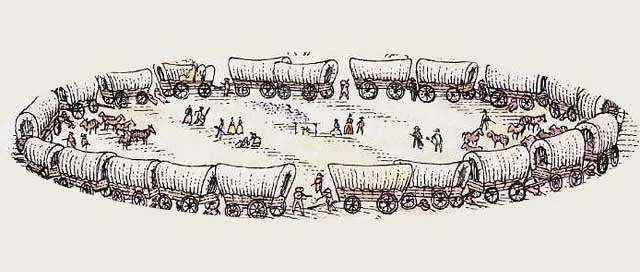
One major drawback of circled-wagon age segmentation is a stifling of the Spirit. It can also spill over into racial and socio-economic segregation, where we mainly look out for the interests of others like ourselves.
When older adults isolate generationally, dreams may default to favorite reruns or fast-forward to heaven. We shut out prophetic words coming from younger generations. We resist or discount the vision of young leaders. Instead of the dove of the Holy Spirit releasing us to wholeness, we get pigeon-holed.
Thanks for helping us reinforce this message: We all need each other. May God continue to help us value each part of the body of Christ!
Dying, Dead ... Or Just Dormant?
We’ve discovered while working with adults over fifty that some dormant periods are common.
Where we get into trouble as leaders is mistaking temporary setbacks for signs of death, “the beginning of the end”. We move prematurely into thinking days of fruitfulness will never return.
One of springtime’s obvious blessings is seeing dormant lawns, plants, and trees come back to life.


And occasionally, as life springs up, we may discover some plant life is actually dead—beyond the reach of fertilizer and special care.
We’ve discovered while working with adults over fifty that some dormant periods are common. Where we get into trouble as leaders is mistaking temporary setbacks for signs of death, “the beginning of the end”. We move prematurely into thinking days of fruitfulness will never return.
One friend shared that after her cancer diagnosis her church never again called on her to serve. Even after successful treatment and years of remission, her earlier dormancy period mistakenly signaled that her productive years were over.
And sometimes our own aches and pains send a clear signal to stop. Indeed, for a season slowing down or stopping may be the right choice, allowing the body to heal before pressing on.
But let’s continue to pray for dormancy’s end and for our resurrected Lord’s joy to reinvigorate our body, mind, and spirit.
As flowers bloom around us, let’s look for fresh ways to send clear signals to God and others—we’re ready for more.
Pushing Through Setbacks
Little did I know that just minutes after the above photo was taken that I would lose complete control of the left side of my body.
Like the leader of a local faith community who approached Jesus and confessed he was dealing with both faith and doubt, I am dealing with uncertainty as I am confessing my faith.
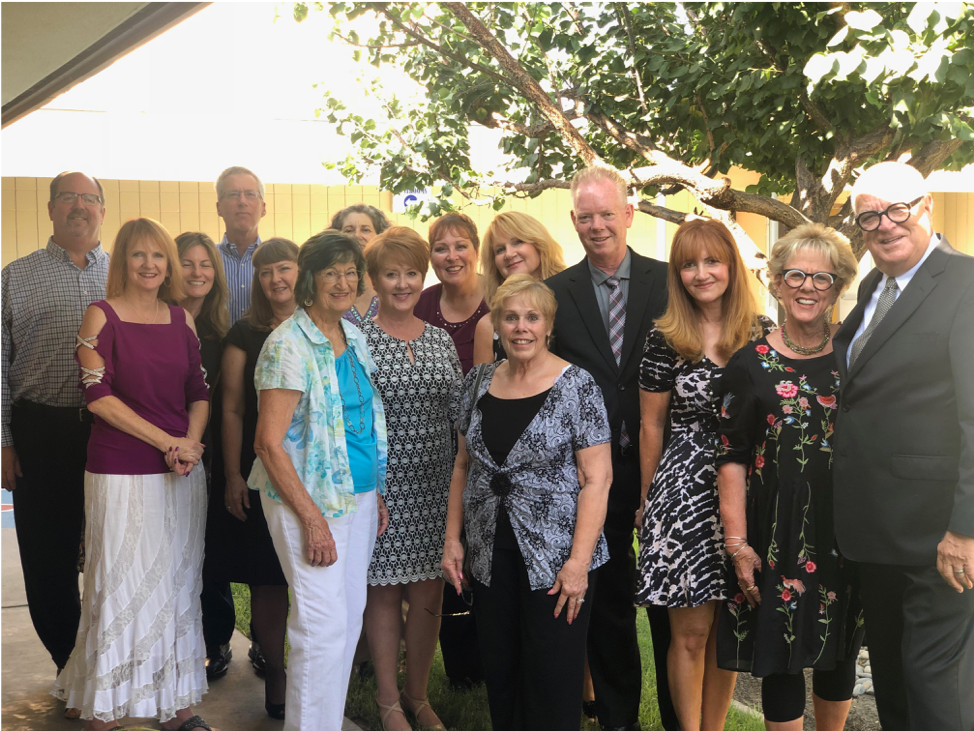
August 25, 2018 (Perry and Judy’s 34th wedding anniversary). “My life changed ten minutes after this photo was taken. I’m the tall guy in the middle. I had been standing around talking to all these people pictured. They are friends I made 40 years ago at Christian Life Church in Long Beach California.”
It was both happy and sad, the reunion of people from our high school youth group days. We had gathered to say goodbye to one of our own who passed away a week earlier after battling cancer for nearly a year.
Most of us hadn’t seen each other in a very long time. It was fantastic to get caught up with one another. Little did I know that just minutes after the above photo was taken that I would lose complete control of the left side of my body.
God was very gracious to my wife Judy and me, and we were able to get to the hospital in record time. I was calm most of that initial experience. It wasn’t until late that night that the gravity of my stroke hit me as I laid in a hospital bed. I cried.

The past nearly seven months have been like the memorial we attended the day this happened, both sad and joyful. For the most part, once I accepted the idea that it was this going to take a long time and was going to require much of both Judy and me, my attitude has been relatively good.
Am I anxious? Absolutely. Am I hopeful? Definitely. Do I have spells of depression? Yes. Do I believe that God has this? No question.
Like the leader of a local faith community who approached Jesus and confessed he was dealing with both faith and doubt, I am dealing with uncertainty even as I am confessing my faith.
Some people have asked me, “What do you think God is trying to teach you by this?”
My response has been that I am learning a lot by the experience, but I in no way believe that God caused this to happen. We live in a fallen, broken world, and our bodies simply break down. There are lessons to be learned, and for me, most of them have been spiritual. I try to see the possibilities in any situation.
My neuropsychologist warned that I should take a break from my role in counseling people from church. Basically, he was telling me, “Don’t get in a position where you’re having to listen to people because you will possibly be emotionally unstable.”
The funny thing is, the people I spent the most time listening to were not from our church or my friend groups, but were people on the hospital staff. I became known around rehab as Pastor Perry and had numerous conversations that led to Jesus. Honestly, I don’t think I could have avoided any of them, and I’m glad I didn’t.
The biggest lesson I’ve learned so far is that I have amazing friends and am reaping the rewards of investing in people. Pouring into people is something that I tried to avoid when I was in high school and early college. But then the Lord grabbed hold of me and showed me that I needed to take the risk of loving people even though they may leave. (I moved around a lot as a child.)
I got a clear glimpse of my shallow response to friendships on an Australia trip back in 1980. My fellow teammates were crying their eyes out as we said goodbye to the people with whom we had spent a month, knowing they’d likely never see them again. Stoically, I was not crying and was just excited to be heading home.
The deeper love I saw in my teammates challenged me and changed my life. It was one of many moments that I’m reflecting on now—seeing how God moved me from one place to another for His purposes.
Push through. Not by denying our doubts, disappointment and disability—but by embracing our God who remains at our side. His love is deep, and He is faithful. He won’t leave us.
Perry serves on the YES! Young Enough to Serve board of directors. He has been candidly sharing his stroke recovery journey on Facebook and now on this blog site: https://faithanddoubt.life . We encourage you to visit the site and glean from Perry’s courage and insight in facing this unexpected challenge. No matter what we face, God is not finished with us, and He can use our trials to build our character and help others.
The 'Wow' Factor
We don’t serve to wow others, but God can sure use willing hearts to help inspire.
Never underestimate the value of meaningfully engaging the very young and very old in serving. Don’t write them off … they have special capacity to motivate others.
In our serving efforts and other contexts, we’ve noticed how the word ‘wow’ so often gets attached to age-spectrum highs and lows.
“She has such stage presence. Wow, she is so young!”

Or “Wow, can you believe what a great worker he still is at 88 years old?”
On our recent annual pilgrimage to Gleanings for the Hungry, our YES! team ranged in age from 54 to 88.
Albert Branker, an 88-year-old native of Trinidad now living in Sparks, Nevada, prompted wows from those serving with us at Gleanings.
He himself said he never would have imagined being able to serve so meaningfully at this life stage, and he’s already making plans to return next year, Lord willing.
Another Gleanings volunteer, Russ, is 101 and plans to return to his serving post again this month. Wow!
A couple young Asian families also served alongside us at Gleanings. Their young boys triggered more ‘wows’ with their servants’ hearts. They quickly volunteered to clean restrooms and worked diligently at other assigned tasks, too.

These serving standouts—kids seemingly too young to serve and elderly presumably too old to serve—have an inspiring ripple effect on the rest of us.
If Albert can still make it back to serve after the 3 PM break, why would I think I’m done for the day? Or, if these young kids can model such effervescent enthusiasm and strong work ethics, who am I to do otherwise?
We don’t serve to ‘wow’ others, but God can sure use willing hearts to help inspire.
Never underestimate the value of meaningfully engaging the very young and very old in serving. Don’t write them off … they have special capacity to motivate others.
Boldly GO!
Retirement was never about unplugging from serving, sharing, and giving ... or going. This was in our DNA; this kind of living wasn’t going away. So we positioned ourselves for being available, useful, even as we made plans for travel in our motorhome.
As I write this, I am sitting in the Public Library in Fukuoka, Japan, surrounded by people I cannot communicate with but for whom I have a great heart.
Charlotte and I could be traveling across the US in our motorhome or enjoying time with our grandkids. But here we are, in awe of the opportunity God brought our way.

Gary & Charlotte Geesey, Missionaries to Japan
Do we miss our family and friends back home? Certainly, but thank God for technology and the service it provides to stay in touch.
Retirement was never about unplugging from serving, sharing, and giving ... or going. This was in our DNA; this kind of living wasn’t going away. So we positioned ourselves for being available, useful, even as we made plans for motorhome travel.
While there were places we wanted to go and things we wanted to do, the route we took was often determined by who lived “on the way” that we could see. And when we arrived, was there something we could say or do to be a blessing?
Our early-retirement US adventure prepared us to expand our horizon to consider international travel and the opportunity to serve where we could be useful. Concerns for living in a foreign culture and all that goes with it are offset by faith in the One Who calls us to follow His lead.
We challenge those in “our season of life” to consider the endless opportunities to serve overseas for whatever length of time suits you. It is the Lord who goes before you; let Him write a chapter of adventure that you never imagined possible.
Consider this quote from author Ann Voscamp ... carry this with you all day today:
Success isn’t about being amazing…it’s about being obedient. Before you blink and your one life’s a tendril of smoke, a memory, a vapor, gone, know this: you are where you are for such a time as this—not to make an impression, but to make a difference. Break free of your comfort zone today and do something --- touch someone, give something, help someone, pray for someone, serve someone.

And might I add ... go somewhere you have never been or thought of going to ... like Japan! Begin by praying prayers of surrender and a willingness to say YES to whatever the Holy Spirit drops in your heart and mind.
Don’t dismiss those thoughts as being “wild.” An adventure with the Lord to a far-off land might be in His mind for you. Boldly GO and see what He will do through you.
Gary & Charlotte can be reached by email, garygeesey@gmail.com, or through Facebook.
Are You Living Your Dream?
With a simple heart pivot, God can transform present vocational or situational perspectives so that we can readily attest, “YES! I’m right where God wants me for now, living out His dream for my life.”
Almost twelve years ago, nine months before Judy and I started YES!, our pastor showed a video clip in which several people were asked, “Are you living your dream?”

Sadly, the honest answer for most people, from both inside and outside the faith community, was “No.” We at that time had a new YES! dream percolating, but we were still months away from living out the dream God was placing on our hearts.
Several years later, while serving as missionaries-in-residence with YES! in Spokane, Washington, we recall meeting with a young, stay-at-home mom, who told us, “You have the dream job.” We couldn’t help but agree, even though we too were struggling to pay bills and were residing that snowy month in a very humble cottage.
We were definitely blessed to be in our ’sweet spot’, actively partnering with young leaders to help light a serving spark in older generations, while casting vision for more vibrant, life-breathing connections between generations. We helped encourage over a hundred brave souls to join us downtown in frigid temperatures to serve the homeless. We heard powerful testimonies of how God was changing hearts and redeeming lives.
We even shared in the Northwest excitement of the Seattle Seahawks winning their first Super Bowl. We, like the Seahawks, were ‘living the dream’.
Pursuing our calling full-throttle may not come with the amenities, benefits, and security we’ve come to expect in ‘normal’ careers. But as we seek first His kingdom, other blessings are added. God has been so faithful in supplying every need through the generosity of many people/churches and through a series of other God-orchestrated miracles.
And, too, with a simple heart pivot, God can transform present vocational or situational perspectives so that we can readily attest, “YES! I’m right where God wants me for now, living out His dream for my life.”
Praying that you, along with us, can approach 2019 with new, exciting dreams percolating!

Afterglows
In these last days of 2018 and in this new year ahead with life’s busyness, we hope you’ll take time for afterglows with loved ones.
And may all of our lives - lived out in the afterglow of Jesus coming to save us – reflect His joy, grace and deeper appreciation for His Word.
Our family affectionately labels special re-cap times - following an event or activity – as “Afterglows.” Perhaps you do the same.
Sometimes they are spontaneous - like after Wes & I have friends over for dinner. When they depart, we attack the kitchen together (another reason I love him!). While rinsing plates and loading the dishwasher, we rehash the evening, maybe retelling a funny story or commenting on an interesting point raised during dessert. It’s our private afterglow - a way to tie the gift of that day with a perfect bow. And, bonus - clean kitchen.
Some afterglows are planned. When each of our children got married, we knew after the rehearsal dinner, wedding and reception that we would still want more time with family and close friends. Thus, each wedding had an afterglow (minus the newlywed couple who were having their own!).
Two Sundays ago our home church, Christian Life Center in Santa Cruz, voted in our new Pastor – Jeremy Anderson. He, Debora and their four beautiful children were welcomed with amazing enthusiasm!
Following this really special day at church, Wes treated me to coffee at Verve in Santa Cruz. Sitting outside, with a delicious cup of java, my boyfriend and a heart filled with joy over what God is going to do in our church, county and beyond – made for a perfect Sunday afternoon afterglow.
But this year’s favorite afterglow happened following my daddy’s memorial celebration and graveside service in September. My mother wanted her five kids, our spouses and all her grandchildren to meet at our family homestead in Covina, California.
In my dad’s last twenty-nine years on Planet Earth, he read through the Bible annually. One of his final deathbed wishes was that each of his thirteen grandchildren would receive a Bible from him and Mother.
That special afternoon, Gram presented the grandkids with one of Papa Don’s well-used Bibles, each received with such joy. The richness of that afterglow will live in our hearts forever.
Our youngest son, Jeremy, has grown in his desire to memorize Scripture. While he’ll treasure Papa Don’s King James Bible the rest of his life, it also inspired him to buy an English Standard Version hardcopy. For all his adult life he had relied on Bible apps for study and memorization. He is now gaining a new appreciation for the old-school, bound copy of the Bible. Papa Don would be so proud!
In these last days of 2018 and in this new year ahead with life’s busyness, we hope you’ll take time for afterglows with loved ones.
And may all of our lives - lived out in the afterglow of Jesus coming to save us – reflect His joy, grace and deeper appreciation for His Word.
Better Outcomes in All Retirement Stages
Retirement is obviously a very culturally-based phenomenon. For nearly a century Americans have shared the notion that vocational retirement will commonly occur around the mid-sixties.
But how do we as Christ-followers avoid becoming overly predictable, stereotypic pawns of an entitlement culture?
With Jesus going to the cross at age 33 and with most of His disciples martyred in the line of duty, we don’t have much New Testament exposure to vocational retirement. Some may argue that Jesus’ post-resurrection and pre-ascension days might resemble vocational retirement, but this period lasted only forty days, not decades. And, while less visible, He was clearly still about His Father’s business.

This essay is one of many compiled as a small cadre of leaders/authors gathered in Colorado Springs in November 2018 for the inaugural meeting of the Retirement Reformation Roundtable. Click on the photo above for the full collection of essays.
Retirement is obviously a very culturally-based phenomenon. For nearly a century Americans have shared the notion that vocational retirement will commonly occur around the mid-sixties.
Some retirement decisions are mandatory, but most are self-initiated. They are, of course, heavily influenced by federal laws/benefits, physical and mental health, unions, pensions, media advertising, employer policies, peer pressure, and other factors—loud voices that can easily drown out the whispering call of Jesus.
Stages
So, what are these three retirement stages, highlighted in the essay title?
The medical profession might refer to the stage of robust health, followed by pre-frail and frail years, and concluding with a severe dependency stage. Those with an eye on serving potential identify stages of active application (65-77), mentoring (78-86), and reflection (87+). ‘Go-Go’, ‘Slow-Go’, and ‘No-Go’ are other words used to summarize probable stages of a retiree’s life.
We acknowledge that attaching ages to later-life stages, unlike our early formative years, has considerable variance. While we may have all started kindergarten in the five-years-of-age neighborhood, we’re certainly not all retiring at the same age. Some stalwarts will resist vocationally retiring until close to death. Similarly, our minds and bodies will face benchmarks of decline, varying sometimes by decades, not just months or years.
Most people choosing to retire want to do so while they are still in relatively robust health. They know the clock is ticking on world travel and other experiences they may have postponed while tied down to a job. And some who traveled extensively in their jobs may crave being grounded, with less time on the road.
But how do we as Christians, defined as Christ-followers, allow Jesus to orchestrate our concluding encores? How do we avoid becoming overly predictable, stereotypic pawns of an entitlement culture?
Listening Ears
Most believers accept in theory that we are called to live for God all the days of our lives. While vocational employment may come and go, spiritual retirement is not part of His agenda for us.
Having served in 50+ ministry now for over ten years, I’ve observed a broad spectrum in how Christians view their own retirement. Borderline workaholics may resist the notion of slowing down, at every turn. Others, even in Christian circles, may view retirement as a well-earned, kick-back pass to do whatever suits their fancy. Many others seek kingdom purpose that includes intermittent, welcomed rest.
If Jesus is truly our Lord, it’s vitally important that we listen to Him intently and take our marching orders from Him. He may call some to continue vocational pursuits long beyond common retirement benchmarks. He may ask some of us to live as salt and light among those who have chosen a more traditional, leisurely path. His calling is both general and personal, and it’s His calling that should drive and steer us as His followers.
Many of us who were Christians in our young adult years prayed fervently, asking God to direct us in our choice of a major area of study, vocation(s), mate, first apartment or home, etc. We need similar, fervent prayers in these latter stages of life, asking for God to direct us in potential retirement decisions, arenas of service, geographic living area, downsizing decisions, investments/giving, grandparenting, etc. We’re not designed to live on autopilot.
Free At Last
Personal freedom tends to ebb and flow in these later-life stages. For those with families, the empty nest is often an early gift of personal freedom. Financial breakthroughs in becoming debt-free—even paying off a mortgage—can also usher in that “free at last” euphoria. Freedom, though, is fickle and can be quickly and unexpectedly reversed with challenges such as caregiving, personal illness or disability, financial disasters, diminished energy, and other setbacks.
How we steward initial freedoms will often be a strong indicator of how well we’ll navigate life’s later twists and turns. Serving the Lord with gladness during your robust years will often carry purpose and blessing into your later more frail and dependent years. Sadly, self-centered patterns cemented in the physically robust years may become even more pronounced as physical bodies decline.
In our ministry, YES! Young Enough to Serve, we focus nationally on the unrealized kingdom potential of adults over fifty. One reason for starting at this earlier, half-century milestone, rather than a more typical retirement age, is that this retirement-prelude period is often when retirement perspectives are shaped and solidified.
The Gift Of Momentum
Momentum is a powerful force. Active surrender to the Lordship of Christ is a posture best adopted early and then sustained throughout the rest of life’s ups and down. Yes, God-given epiphanies and repentance are possible at any juncture. If, however, we’ve allowed our culture to pre-define retirement for us, our openness to radically obey Christ may be constricted.
In other words, if retirement is an “all-about-me” entitlement, our attitudes and activities will largely be shaped by this presupposition. If we adopt a whole-life/Jesus-first perspective, we will constantly be on the alert, looking for practical ways to please, honor, and serve Him.
A servant’s heart is a beautiful attribute at every life stage.
I was blessed to see radical obedience to Christ play out in the life of my father-in-law, who passed away recently at the age of ninety. As I look back at his retirement era choices, I see a clear pattern of breaking traditional norms to follow Christ. These choices helped catapult him from one life stage to the next, each season filled with an uncommon, off-script sense of purpose.
I was first blown away by his surprising transition from a retired house painter—residing comfortably in a Southern California suburb—to serving as an inner-city pastor in San Francisco. He was obviously not looking to settle into a traditional retirement. He was committed to kingdom impact and to following the Lord’s leading, wherever that might take him.
Momentum from his physically robust years served him well as his physical stamina diminished. Physically demanding serving projects eventually subsided while mentoring relationships became a more central focus. His serving adventures took him to a variety of locations domestically and internationally, while his ninth decade was dedicated to fruitful living and reflection back on the home front.
With his geographic scope narrowed, he still found ways to venture outside typical comfort zones. His favorite final-decade serving adventure was attending twice-weekly chapel services at a nearby Christian college, making himself available to converse, counsel, and pray with students, faculty, and staff. It was a breath of fresh air for both that academic community and him.
At age ninety, some of his peers would declare that they had outlived all their friends. My father-in-law, by contrast, had dear friends from all generations. His memorial service was attended by people impacted by him in the past weeks and months, as well as those touched decades earlier, spanning nearly a century.
Counter-Intuitive. Reasonable. Blessed.
Reflecting on Jesus at the Last Supper, conventional wisdom would tell us that Peter had it right. He should have been the one washing Jesus’ feet. Jesus was about to die for the sins of the world, and here He was, taking time to personally wash the disciples’ dirty feet. Jesus set before us a counter-intuitive path, one that he wants us to adopt as we enter into life stages when others might naturally insist that it’s time we set the serving towel aside.
While counter-intuitive, Jesus’ call is not wildly irrational or unreasonable. Jesus had good reasons for washing the disciples’ feet. He did it to show us the way. “Now that you know these things, you will be blessed if you do them.” John 13:17 (NIV)
You may need to make some reasonable shifts along the way. If you’re a roofer approaching your seventies, God may want you to find serving avenues a bit more down to earth.
Being called to have a servant’s heart until our last breath is not a miserable life sentence. It will enrich our lives each step of the way.
And we urge you, brothers and sisters, warn those who are idle and disruptive, encourage the disheartened, help the weak, be patient with everyone.
1 Thessalonians 5:14 (NIV)
When Paul, Silas, and Timothy urged the Church at Thessalonica to warn those who were idle and disruptive, I doubt the warning was to be couched in guilt, shame, or legalism. It was for their own benefit, for both now and eternity. Disruption of Christ’s lifelong plan— by choosing the idle lane—is not good for us nor those around us.
We’re the winners when we choose to follow Christ’s example and walk the lifelong path of a servant. It’s the truer path of blessing.