

Streetless in Spokane
Yes, he saves us all from lots of terrible stuff, sometimes before disaster strikes and sometimes after, but He also saves us so that we can become an extension of His love to others.
What was God thinking when he opened the door for us to leave mildly warm Santa Cruz and head to Spokane in the middle of winter? Aren’t birds supposed to fly south for winter?
In advance of our trip we asked our dear niece Christine, who lives in Spokane, to prayerfully consider creating a church-wide outreach where all generations from her church could get involved. The Lord birthed in her and her husband Brett’s heart a very special opportunity to “get out of our seats and onto the streets.”
It was a catchy title, but who in their right minds would hit the streets to serve the homeless in downtown Spokane on a Saturday in snowy, sub-freezing weather? Maybe a handful? Certainly very few, if any, adults over sixty.
Pastor Kent, the lead pastor at Valley Assembly, his wife Toni and their sons were the first to sign up for this outreach. Several adventurous young adults and teenagers began to sign up.
On Super Bowl Sunday in the Northwest, with an abundance of Seahawk fans eagerly anticipating the big game, Christine celebrated her fortieth birthday by sharing with the congregation her passion for that week’s Saturday outreach with Blessings Under the Bridge. It was powerful and moving.
It was so moving, in fact, that Sharon, a spiritually mature senior adult, darted from the back row to the platform and asked Pastor Kent if she could share a few words. We later learned that this was out of character for both Sharon and this church of a thousand.
It was the perfect, intergenerational ‘one-two’ punch. It was a cry for those of us 'streetless' people, older and younger, who may have never experienced living on the streets, to willingly hit the streets to share food, clothing, toiletries, compassion and dignity with those less fortunate.
Both Christine and Sharon have experienced incredible transformation in their own lives, as God challenged them to begin loving people with radically different backgrounds, including many from the streets.
They shared how God saved many of us (in advance) from extreme hardship, not so that we could:
- Sit comfortably and gloat,
- Sit sheepishly with a sense that we have an unremarkable, inferior testimony of God’s grace, or
- Sit immobilized with thoughts that we can’t relate and have nothing to offer people in such despair.
Yes, he saves us all from lots of terrible stuff, sometimes before disaster strikes and sometimes after, but He also saves us so that we can become an extension of His love to others.
As temperatures dipped below zero by mid-week, we wondered if we should possibly forgo the foot-washing station we had planned for Saturday. But we sensed the Lord challenging us to press on in spite of the weather. And He blessed us with sunshine and a ‘heat wave.’ Temperatures jumped to just over the 20 degree mark! :) And a local rental company, A to Z Rentals, blessed us with patio heating lamps and propane, free of charge.
By Friday an inspiring collage of clothing, accessories, toiletries, backpacks, and food supplies had appeared at the YES!/Blessings Under the Bridge table at the church. Some donations came from older adults physically unable to make it to the outreach on Saturday---but who still found a way to take part.
A group of women, most of whom were formerly homeless themselves, were busy preparing meals for Saturday’s outreach atChrist Kitchen, another local ministry the church was able to engage and bless through this outreach.
Brett & Christine’s daughter Anna was busy making bracelets, excited to use her hobby to bless others.
On Saturday morning a hundred volunteers showed up at Valley Assembly in Spokane Valley for instruction and inspiration. Three very special women from the Women’s Home at nearby Victory Outreach shared important perspective from their prior life on the streets.
Everything fell into place as this courageous team representing every generation within the church, arrived at the downtown serving location. Everyone found their niche, and we all had a chance to shower about 140 precious people with Christ’s love.
As you can imagine, many powerful testimonies emerged from this outreach. And the testimonies show us again how God loves to bless us in special ways as He uses us to reach out and bless others.
With countless cars streaming both east and west on the I-90 overpass above us, countless blessings flowed that Saturday in both directions under the bridge.
It was cold and heartwarming . . . the perfect storm! It was the church in action, the ‘streetless’ impacting the homeless, and the homeless impacting the streetless.
For more pictures, please visit the Blessings Under the Bridge website.

Tapping Into the Power of Intergenerational Ministry
“For a long time, churches have treated teenagers like they live in their own world. They have their own music, their own service, and their own culture. The only person with a passport to go between the teenage and adult world is the youth pastor.
As youth pastors, we know that we can have a greater impact if more adults have passports to go between worlds. We want to see adults draw nearer to the younger generation and mentor them in a life with Christ.”
"Intergenerational." Because it's a word that doesn't appear verbatim in Scripture, we might view it as a passing fad in American churches.
But a closer look at Scripture shows kingdom principles, relationships, stories, legacy and disciple-making flowing freely from generation to generation, not just within generations.
Over the past year we have been privileged to partner in a significant way with the CASA Network (Christian Association Serving Adult Ministries) and the Fuller Youth Institute, champions of the Sticky Faith movement.
Dr. Kara Powell, author of Sticky Faith and Director of the Fuller Youth Institute, has with her team highlighted key factors contributing to faith that sticks as young people transition to adulthood. With a research grant from the Lilly Foundation, they probed deeply into why a disturbing number of young adults are walking away from their faith.
One of the primary keys to stickier faith is helping churches commit more deliberately to intergenerational ministry. Many churches have great programs for every age group, but silo approaches have limitations when it comes to long-term impact, particularly when high school students transition to college and beyond.
Allow me to share a recent example of a church with whom we were privileged to share in meaningful, transformational impact.
A Collaborative Crossroads Convergence
Robin Garvin, a Southern California Children’s Ministries leader, put out a plea for children’s pastors to read Sticky Faith, to be followed by a discussion session at her home. Laurie Hanks, the children’s pastor at Crossroads Church in Temecula, California, was one of the children’s pastors at that meeting.

Laurie Hanks, Children's Pastor
Laurie returned to her church and met with other children and youth leaders at Crossroads and asked them to read Sticky Faith as well. She also shared the book with the leadership of the Classics group, the name of their ministry for 50+ adults.
“It was at that point Judy (Wick) gave me information regarding the CASA Network/Fuller Youth Institute’s Influence the Generations conference coming to our community,” Laurie disclosed. The Saturday conference was hosted in January by Gateway Church of the Nazarene, and YES! Young Enough to Serve was privileged to be among the sponsors. “Pastor Jim Grams, our Senior Associate Pastor, was then inspired to attend the conference and to get the Classics more involved.”
I was privileged to hear ideas and passion already percolating in Pastor Jim’s heart as we met over lunch at the CASA Conference. Judy was invited to share at Crossroads the following day, which according to Laurie “really helped seal the deal with our congregation.”
“We had talked before about intergenerational ministry and had some movement in that direction, but we never so fully put our feet to the idea. This time, leaders from the children, youth and classics got together to plot out how it would come together.” The women’s ministry leader also read Sticky Faith, and the men’s ministry leader is participating in a life group going through the book, chapter by chapter.
It’s now a very collaborative effort of the youth pastor, senior associate, children’s pastor, evangelism team, and men’s/women’s ministry leaders. Their strategy is to take existing ministries and make them more intergenerational. “We’re not just adding a layer of intergenerational events on top of our already busy schedule; we’re integrating,” Laurie explained.
Senior Adults Adopting High School Seniors
Pastor Jim capitalized on the momentum and got going right away. Thirty members of the Classics group braved a Friday night winter storm to meet and review profiles of each high school senior thoughtfully prepared by the youth pastors, Adam and Amanda Sullivan. While the high school seniors were not present that night, Pastors Adam and Amanda introduced the students' profiles and shared their hearts for these teens.

Adam & Amanda Sullivan, Youth Ministers
Pastor Adam made it clear why he and Amanda believe intergenerational ministry is so vital and strategic:
“For a long time, churches have treated teenagers like they live in their own world. They have their own music, their own service, and their own culture. The only person with a passport to go between the teenage and adult world is the youth pastor.
As youth pastors, we know that we can have a greater impact if more adults have passports to go between worlds. We want to see adults draw nearer to the younger generation and mentor them in a life with Christ.”
Fervent prayers were expressed on behalf of these soon-to-be-graduating high school seniors. And then one by one, twelve seniors were adopted. Some from the Classics group knew right away who they wanted to adopt, and others were joyfully selected after further deliberation.
One ‘adopted’ young man was relatively new to the youth group, new to faith in Christ, and new to healthy Christian family involvement. Before turning eighteen, he was an ‘emancipated adult’ who moved in with a family from Crossroads Church. He plans to go into the military when he is older, so it was very fitting when a retired Navy veteran adopted him. A new relationship is forming, and this retiree is now engaged, along with others, in helping to disciple this young man in his new walk with Christ.
That same weekend, members of the Classics brought gifts to the high school seniors on Sunday morning and introduced themselves to their new adoptees. Basic instruction given to the adopters and the adoptees is to pray, communicate and simply shower each other with the love of Christ.

Jim Grams, Senior Associate Pastor
Pastor Jim shared, "It has been very exciting to watch the Classics jump at the opportunity to come alongside our high school seniors. Surely the Lord is pleased watching the 'older folks' loving on the 'youngsters'! It's just as it should be."
Some Plant, Some Water, While God Gives the Increase
Amanda (youth pastor) shared more about their recent winter camp. Their goal was to have a diversity in ages speak into the lives of the students. So they had Adam (youth pastor), Manny Galvan (college/career pastor), Jake Evangelist (lead pastor from their Bishop campus), and Pastor Jim (senior associate) each share at the winter camp.

Harlem Shake
Pastor Jim, the most senior among them, dove in and participated with the youth in a hilarious YouTube clip of the ‘Harlem Shake’, which instantly helped create a special bond and rapport. “Pastor Jim is everyone’s favorite part of the video. The kids are still talking about it,” Amanda shared with a smile. “And it really helped him connect with the youth later at a deeper level. He was one of us.”
A combined talent night has now been planned for both the youth and Classics. These used to be separate events.
A survey will be presented to the Classics so they can provide their profiles for the benefit of the children and youth pastors, identifying special expertise they can offer in children’s or youth ministry.
The women’s ministry leader is shaping one of their Bible studies to provide direct mentorship to children.

Scott Anderson, Lead Pastor
As another exciting expression of intergenerational ministry, Lead Pastor Scott Anderson asked each of his staff pastors to share a part of the Easter story, with each pastor telling a part of the story to their own age-specific ministry group. The worship leader is attempting to tailor a piece of music to every generation. They are also talking as a staff about creating a special family service quarterly in those months with a fifth Sunday.
Pastor Scott underscored his belief that "intergenerational ministry within the framework of the local church is the exact model of a healthy church."

Crossroads’ evangelism team reached out to the nearby senior adult community of Fountain Glen and helped pave the way for new intergenerational relationships. Kids with Purpose is a summer ministry of Crossroads where the children engage in acts of service within the surrounding community, including Fountain Glen. Among other serving tasks, the kids help the adults create centerpieces for Fountain Glen’s summer luau, with help flowing freely in both directions between the generations.
Because of the evangelism team’s efforts, many adults at that facility are now riding a bus to Crossroads on Sunday. Included in this group of adults is a blind man who for obvious reasons needed more help while working together with the kids on the centerpiece projects. He is someone the kids naturally gravitated to when he began attending Crossroads. How special and inviting for this older adult without sight to be greeted by name by children in the church!
Grandparents Day, September 8, is a major event in the planning stages. Kids are going to be honoring senior adults, and they will be integrated into the children’s services.
Laurie is in her eleventh year as children’s pastor at Crossroads. She has become increasingly aware of her need to connect long term with ‘kids’ formerly in her children’s church---offering encouragement as many of her students transition into adulthood.
She has recently had a special burden for a young college freshman who God keeps bringing to her mind. She texts him occasionally to let him know she’s praying for him. The timing of the encouragement has been God-ordained. “You have no idea. I was having such a hard time, and your text came at just the right time,” he told Laurie while wiping tears from his eyes. It helped him know he was not alone. “Knowing the Lord put me on your heart is powerful.”
“Intergenerational momentum is now here and will be at the forefront of how we plan. Our perspective has matured. Our Classics group will never be the same again---after Judy’s challenge to them.”
From her perspective, Laurie shared that engagement of adults over fifty at their church was pretty typical, with many adults thoroughly committed to serving through Royal Family Kids Camp and other vital ministries. But many 50+ church activities had defaulted to retirement stereotypes depicted in YES!’s Ted video. And while many good things were happening, some attitudes of complacency needed to be challenged. “It wasn’t necessarily a new revelation, but YES! helped provide a strong nudge for us to become much more intentional."
Sticky Faith Becoming Stickier
Pastor Adam is excited. “I believe our efforts at Crossroads Church are doing more than I imagined. We are working hard to remove the barriers that develop between teenagers and adults."

"Instead of an adult visiting the teenage world, the two worlds can unite. Relationships between the age groups naturally push one another to grow closer to our Lord. And we know for the teenager that can make the difference in their faith sticking.”
Pastor Laurie shared further:
“We were able to identify many things already in place that are helping to create faith that sticks among our young people, so fortunately we weren’t starting from scratch. It was good soil that needed to be cultivated. And now we’re planting more seeds and watching them take root and grow.
Judy’s heart in sharing with the entire congregation the importance of loving and supporting each other as a church family had a profound impact. The people were impressed by the passion with which she shared.
Most people in our congregation would have already agreed that we need intergenerational ministry. YES! helped us realize how important and urgent this calling is, and that now is the time to make it happen. The YES! Young Enough to Serve message helped our Classics feel more valued and strategically vital in ministry. It helped them know that their life experience and longevity of faith has current value to every generation.
An outsider’s perspective is so helpful---along with the fresh emphasis on relationships, the kingdom of God, and God’s call for all of us to make an impact, no matter what our age.
These are real needs that people need to grab a hold of.
Lead pastor buy-in from our Pastor Scott Anderson has been so critical. He has always had an interest in intergenerational ministry, but we hadn’t really tooled it out in such practical ways.
We were ripe for the message, and it solidified what we needed to do. YES! put an umbrella over it and helped everybody grip the handle of the umbrella. YES! helped our whole church connect to this passion and to become more deliberate in reaching outside our peer groups.
The seed has fallen on good soil. It is well integrated and spreading.”
To God be the glory for allowing us to be co-laborers in healthy transformation happening in the lives of individuals, groups, churches and communities!
-----
Wes and his wife, Judy (Popineau) Wick, are founders and directors of YES! Young Enough to Serve. They would be honored to help your church move to a stronger, more intentional platform of serving, intergenerational ministry and disciple-making. Please connect with them.
PLEASE CLICK HERE IF YOUR CHURCH MIGHT BE READY FOR AN INTERGENERATIONAL TUNE-UP.

Rattling Cages Without Losing Your Tigers
No age group wants to feel the insult of being unconsulted, caged in, irrelevant or blindsided. Changes that follow prayer and cross-generational collaboration are more likely to unify the whole body.
You’d like to prod them with a swift kick to the posterior, but you can’t afford to lose them.
What do you do with change-sensitive older adults in your church who are paying your salary and keeping the lights on?
You may have read Who Stole My Church? by Gordon MacDonald. But that was fictional. You have a real life dilemma staring at you, and you’re feeling tentative. Rattle their cage too vigorously, and these tithe-paying, hymn-loving tigers may slip out through a backstage door. Do nothing, and you risk losing the next generations.
A third of your instincts say “Let the tigers go.” A third of your instincts say appease them. And the best third of your instincts say, “Come, Holy Spirit. I need you.”
First off, while praying, get off the stage and into their cage. You can’t rattle the cage from the outside looking in. These older tigers may have a ferocious roar, but they won’t bite.
They need to know your heart. They need to know they aren’t simply an obstacle you’re trying to work around.They need to know you sincerely love and value them, not just for their past and certainly not just for their tithes/offerings, but for their present friendship, wisdom and serving potential as well.
Second, invite young leaders into the tiger cage with you. And like Paul’s endorsement of Timothy and Titus, entrust young leaders with full authority to both encourage and rattle cages (re-direct, correct, rebuke, challenge). Imagine the extra challenges these young leaders had, rattling cages of older men and women, in cultures where respect deepened as you grew older. They challenged older adults to live lives in the present that were worthy of respect, moving beyond their entitlement to respect by age alone.
Third, invite mature tigers to be a part of your planning teams, not just for whole church or older adult ministry, but for other specialized areas of ministry in the church as well, like youth and children. No age group wants to feel the insult of being unconsulted, caged in, irrelevant or blindsided. Changes that follow prayer and cross-generational collaboration are more likely to unify the whole body.
Finally, recognize that a cage is a lousy landing spot for any generation in the Church. It's not a biblical metaphor describing the body of Christ, the family of God, or our call to freedom. Specialized ministry by peer group has its place, but watch for jealous growls when over-emphasis creates cage/age envy. Rattle your own multi-generational cage mentality by giving more emphasis to intergenerational relationship and collaboration. Lead your tigers to freedom!
In our work with YES, 50+ adults easily appreciate the positive affirmation of the first part, 'YES! I’m Young Enough.' The tricky part is the re-directing call—'to Serve.' Now we're rattling cages (correcting, rebuking, challenging)!
But once we reaffirm it’s Jesus calling us to be His servants, it becomes more about Him and less about us.

Orphan Fear
Orphan fear will surface in the strongest of Christians and in the strongest of churches. Jesus didn’t promise that our families, friends, or even His Church would never leave us.
How many orphans are in your church?
Orphanos, the Greek word for orphans, appears only twice in the New Testament, once each in the books of James and John.
Pure religion is defined in James 1:27 as visiting orphans and widows in their distress, and keeping oneself unstained by the world.

The only other time orphan language appears in the New Testament is in John 14:18, coming from the lips of Jesus Himself. He addressed his adult disciples who feared being orphaned and reassured them that He would not leave them as orphans. He would come to them through the Holy Spirit to abide with and help them.
In simple terms we tend to think of orphans as young children and widows as older women. By traditional stereotypes most of us would be able to identify few, if any, orphans in our own church.
Because of adoption and our foster care system, we rarely give American children an orphan label or care for them in orphanages. We recognize, though, that the population of orphaned children here in the United States has not gone away.
Millions of American children have been physically and emotionally orphaned by family dysfunction, addiction, crime, mental illness, abandonment, and the premature death of parents.
Close to Home
This subject hits home because my father was orphaned as a child. His parents separated before his first birthday as his mother returned with him from America to her Norwegian homeland. Eight years later, his mother decided that she no longer wanted to bear the load of single parenting. My dad cried bitterly as his mother left him with his toothless aunt in the tundra of Northern Norway, deep within the Arctic Circle. (The beautiful Land of the Midnight Sun has dark, harsh and frigid winters as well.)
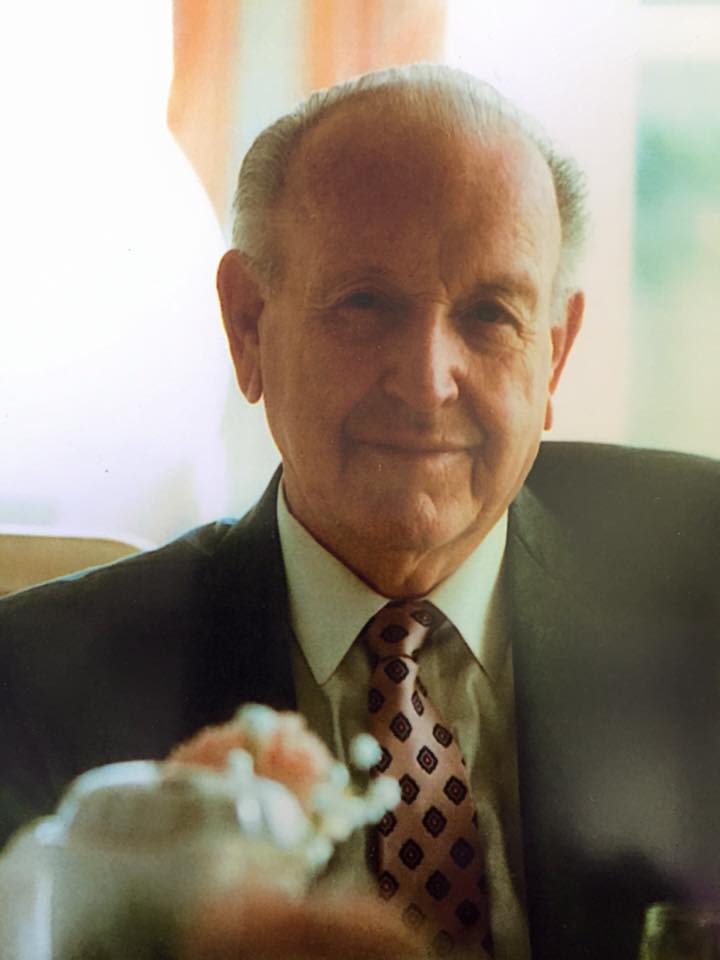
Because I am the seventh of eight children, my dad was well into his forties when I was born, far removed from the days of his orphaned childhood. His life was a testimony to God’s redeeming power, transforming this young Norwegian orphan into a faithful husband, father and servant leader in his church here in America.
Along with his Norwegian accent, my dad had a strong blend of both humility and confidence. He was known as a successful building contractor and generous giver. He gave sacrificially of his time and resources, and his greatest joy came from blessing others.
Orphaned in Life's Second Half
Let’s look at orphans in a broader context, particularly in the realm of older adulthood.
In an ongoing survey of older adults conducted by CHAMPS, the Center for Healthy Aging, Ministries, Programs and Services, respondents list being alone and running out of money as their most common fears related to getting older.
Both orphans and widows deal with similar fears of separation, isolation, loneliness, and personal inadequacy.
Jesus promised that He would never leave or forsake us. Widows face the trauma of being left without a spouse. Orphans often contend with a dual sense of being both left and forsaken.
Adults in later years experience being orphaned in a variety of ways. Many transitional events in life, particularly loss or pending loss, have the potential to trigger orphan fear. Here are some of them:
- The empty nest
- Marital separation or divorce
- Loss of employment
- Pastor/church transitions
- Death of parents
- Retirement
- Loss of driving privileges
- Physical disability
- Major illness
- Moving to a care facility
- Death of siblings & friends
- Child(ren) moving far away
- Economic loss
- Inability to travel
- Death of a spouse
- Death of adult children
- Decade milestone birthdays
- Diminishing sense of usefulness
Orphaned Again
Like most Americans in his generation, my dad officially retired in his sixties.
Within church life as well, my dad passed the baton to the next generations. Although he liked control, he didn’t appear to have an overly tight, possessive grip on the baton. As he experienced these significant life transitions, though, it was soon apparent that he was beginning to feel like an orphan again. He and many of his peers were experiencing orphan fear within the church.
If his work in business and the church were both finished, what would he now do with the measure of strength, wisdom, skill and experience he still had to offer? He wasn’t at the state of dependency where he needed to be visited in his distress. At his core he needed to be needed.
As with most persons blessed with a “driver” personality type, retirement for my dad did not come naturally. He always wanted at least one problem-solving project and one future trip in the hopper.
It’s easy to point to my dad’s lack of hobbies as a predictable recipe for restlessness. But where in the Bible does it teach us that hobbies are the answer to filling life with purpose and meaning?
He enjoyed his relationship with his growing extended family and his peers. But there was something missing in his experience within the church.
He wasn’t driven out by loud music. He wasn’t a victim of blatant disrespect. His prior contributions in the church did not go unnoticed.
But, unlike his family context, the church no longer seemed to seek his advice, encourage intergenerational relationship or value his continuing contributions apart from financial support.
For my dad his resurfacing orphan fear had more to do with a diminishing sense of usefulness. He didn't have the fear of becoming financially destitute. He and many of his peers were getting cues that their time was pretty much over, and the next generations were now doing their own thing. But he was still alive, relatively healthy, and still had so much to offer.
At this stage of life, he wasn’t going to force his way into helpful relationships. He wanted to be invited. In fact, he loved being asked for his guidance and counsel.
What many churches offer at this point in life is quarantined fellowship with peers. Fun, food, and fellowship are partial antidotes for orphan fear, building a framework for supportive friendships. But this ministry approach can also become an isolated, inwardly focused support group for aging orphans, short-circuiting life-breathing connections with younger generations.
Perhaps my dad expected too much from the church and too little from the Spirit, but either way, the promise of Jesus seemed out of synch with his fourth quarter experience in the church. In reality, he wanted the church to expect more of him. He wasn’t done.
My dad remained a member of his church to the end. He never became a widower, and thankfully caring pastors and lay leaders did visit him faithfully in his later years of more obvious distress, dependency, and dementia. But by that time a couple decades of opportunity had passed, and those early retirement years of quiet distress went largely untapped within the church.
Promise of Jesus
Orphan fear will surface in the strongest of Christians and in the strongest of churches. Jesus didn’t promise that our families, friends, or even His Church would never leave us. He promised that He would never leave us or forsake us and that the Holy Spirit would come to both comfort and equip us. And the equipping power of the Spirit does not expire at retirement. He continues to give comfort and equips us for new opportunities.
Like Jesus let’s respond directly to the orphan fears of adults around us! And may we rely on the Spirit’s presence to address our own fears as we grow older. He will never leave us as orphans!
Let’s revitalize ministry through as well as to the aging adults among us. Giving older adults the opportunity to enrich the lives of others may be the best gift we can give them. They want to be valued, useful, and connected to the full body of Christ. As Christ followers, they need to be engaged in making disciples.
God wants to fill these later years with significance, and He’s asking you to partner with Him. Please do your part in helping aging adults overcome their fears.
Orphan fear does not have to translate to orphan identity. Just look at the disciples. With the abiding presence of the Spirit, they moved beyond the fear and transformed the world.
Come, Holy Spirit, come.
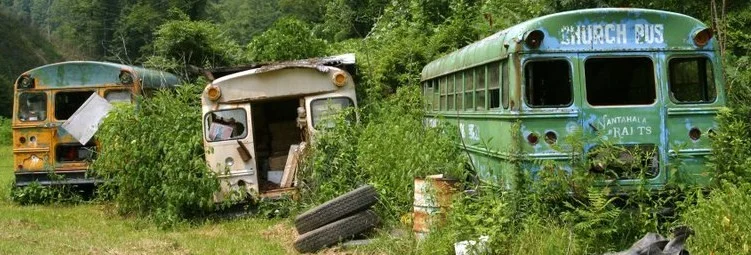
Throwing Grandma & Grandpa Under the Church Bus
We need the balance of elder wisdom and experience combined with youthful energy and innovation.
How far do you pull away from an old friend?
In pursuit of election to political office, politicians sometimes need to distance themselves from former allies who could potentially steer their campaigns off course.
After a candidate’s customary re-posturing statement, media pundits love to measure and debate the distance of the distancing. He or she didn’t go far enough, went too far, or got it just right.
Bus metaphors are plentiful in this distancing dialog. On the polite end of distancing etiquette, moving symbolically to another seat on the same bus doesn't quell the public outcry. At the other extreme, throwing a former friend under the proverbial bus represents the ultimate in distancing jargon---but also the ultimate betrayal.
A Visit to Your Neighborhood
Let’s quickly drive the bus away from the tired streets of politics to seemingly calmer neighborhoods where multiple generations from your church family reside.
In many families within your church, a very real and active faith in Christ has been passed down from generation to generation. Ask younger members of your church about persons of greatest spiritual influence, and chances are good that many will place a grandparent first on that list.
To be fair, others from both inside and outside your church share in the impact, but grandkids will still often point to their grandparents as having the most significant impact on their spiritual journey.
So how’s the bus ride for those in your church on the second half of their trip?
How’s church life for these graying sojourners who carry a biblical mandate to give testimony of God’s power, wonder, and faithfulness to the next generations?
As you look at these saints who often have top-seed influence rankings in their families . . .
- Does your church family recognize and celebrate the current value of these elder travelers?
- Or do your older adults feel they’re always being forced to take a back seat?
- How’s your MPG, Miles Per Generation?
- Are you secretly praying for Tom Brokaw to personally adopt the group he hailed as the Greatest Generation?
- Are you convinced this traveling band of hymn-lovers is conspiring to throw your church into reverse gear?
- Have you thrown them off the bus or, heaven forbid, under the bus?
In a recent review of over 800 posted church leader positions on churchstaffing.com, just one position was listed that specifically targeted the second half or older adult population. And that lone position was unfunded, requiring the candidate raise his or her own support!
In an era when the Baby Boomer fleet has already pulled into your community in record numbers, this detour away from opportunity is surprising to those already working with this strategic fifty-plus population.
Churches invest readily and heavily in energetic children’s/youth pastors and programs because they are ministering to our future.
Forward-thinking church leaders rightfully see potential for positive ripple effects. Get these spiritually ripe kids involved, impact them for a lifetime, and hopefully influence their parents and friends to be an active part of your church family as well.
And let’s face it…kids will not sprint to catch your bus if only older adults are onboard!
But in what direction is your bus moving to reach all generations?
The youth in Asia show incredible respect and care for the eldest among them. In contrast, many youth in America display attitudes of indifference toward the elderly and support euthanasia.
Not only do Eastern cultures read from right to left, their generational perspective appears to be flipped 180 degrees. Most churches in the Western world appear to think strategically from youngest to oldest. Eastern cultures think oldest to youngest.
Scriptural teaching on discipleship suggests it’s our Western church culture that is directionally challenged. Unfortunately, churches with tunnel vision for the young will often stop far short of reaching and equipping every generation.
With strong pastoral leadership, the bus going from Elder Park to Youngstown is better equipped for long-distance travel, more likely to reach its destination than the reverse route. While seeming to move more quickly at first, the Youngstown to Elder Park bus tends to break down when facing uphill challenges, never quite making it to Elder Park.
Let’s view this topic briefly from a higher plane; say from an Airbus at a cruising altitude of 30,000 feet:

"In case of sudden loss of cabin pressure, please apply your mask first before helping your younger children."
Does this mean that the children on the Airbus are less important? No, it simply means that all of you will have a better chance of survival if you move sequentially from older to younger.
Be intentional about ministry through these midlife and older stalwarts of faith, and make sure their vision extends intergenerationally all the way to the nursery.
By keeping the right sequence, we avoid either/or scenarios. Whenever possible, it should be both/and. We don’t have to neglect or marginalize the older to reach the younger! We need the balance of elder wisdom and experience combined with youthful energy and innovation.
A church bus with multiple generations represents a more complete cross-section of the body of Christ. Those traveling on it have opportunity for an enriching, cross-cultural experience, as long as they make room for relationships outside their peer group.
No matter which direction your bus is heading, tough uphill challenges will surface. You will at times face an overheated engine and overheated passengers. Open your windows on both sides of the age spectrum and allow for a healthy cross breeze of the Spirit. Prop them wide open and make sure every generation is on your bus and is breathing fresh air. Gain some downhill momentum for those uphill climbs.
It shouldn’t take a Bible scholar to convince us that throwing grandparents under the church bus is not part of God’s plan.
But what about our changing culture and the need to create new buses for different kinds of patrons?
In these changing times, it’s not just the young needing to catch a vision for a new church bus or an overhaul of your old one. Older generations need new buses to replace worn-out, unbiblical attitudes toward retirement, ageism, and age segregation. They need to dream with you about completely new types of vehicles to help your church fulfill the Great Commission by reaching younger generations and other cultures.
Here are some tokens of advice as you shop for a new bus or overhaul your existing one:
Keep Grandma and Grandpa on the bus and involve them in the change process. Quoting I.W. Lynett, “The best way to cope with change is to help create it." Don’t assume that older generations are universally resistant to change. They have experienced and adapted to incredible changes throughout their lifetime. Welcome their input. If changes are biblically sound and God-directed, patiently cultivate and expect their support. Read Gordon MacDonald’s Who Stole My Church? for wonderful perspective on engaging your older generations in the change process.
If your church has retreated from venues where intergenerational influence used to occur---Sunday school, Sunday night services, prayer times at an altar and midweek children’s programs---be sure you have created new venues that encourage strong intergenerational connections on a spiritual level. Teach your kids to respect, cherish, and learn from these older friends. Teach them the value of engaging in conversation with peers of their grandparents and great-grandparents. Create prayer partnerships. Have your young people help capture their spiritual legacy on video or through creative writing.
Equip your older adults with fresh tools to help them communicate more frequently with their grandchildren. Teach them computer skills, email, text messaging, Facebook and even Web 2.0. Twitter? Well, let's not go too far!
Invest in second half or senior adult leaders who have the energy and drive to move your adults to new paradigms of ministry. Don’t perpetuate social clubs or fun, food, and fellowship paradigms that fail to capitalize on their broader potential for outreach. Balance your budget. Investing fifty times more on children and youth than on second half adults is not a balanced budget.
At your next board meeting, move the needs and potential of this fastest growing segment of our nation’s population to the front of your agenda. Talk about access for physically challenged adults, not just to “the service” but to valuable opportunities for serving and intergenerational influence.
Stop endorsing methods that drop older generations off the church bus prematurely.
Create new bus stops for both the old and young in your community to get on board. When you think about attracting new riders, resist the tendency to think only of young riders.
Start thinking strategically from oldest-to-youngest rather than youngest-to-oldest. Change your vocabulary. Make sure no generation is left behind!
We know it’s not about distancing ourselves, fighting over who deserves the best seats on the bus, or deciding which generation we can throw under the church bus. It’s about all of us drawing closer to God, one another, and the destinations He has mapped out for us.
Don’t do it just because millions of Boomers are entering their retirement years or because it’s your fast track to church growth.

Do it because it’s the right thing to do. Do it because God calls you to value every age group in your church, from the oldest to the youngest.
Do it because you really do love and value Grandma and Grandpa, their great-grandkids, and everyone in between.