
Overanalyze and Paralyze
On over-waiting for the right moment, we love the advice of Seth Godin:
You might be waiting for things to settle down. For the kids to be old enough, for work to calm down, for the economy to recover, for the weather to cooperate, for your bad back to let up just a little...
The thing is, people who make a difference never wait for just the right time. They know that it will never arrive. Instead, they make their ruckus when they are short of sleep, out of money, hungry, in the middle of a domestic mess and during a blizzard. Whenever. As long as whenever is now.
Do you ever get stuck in an analytical mode, something not so fondly labeled the paralysis of analysis?
We recently enjoyed lunch with ministry leader Lars Dunberg, moving full speed ahead at the age of 71. (We featured Lars earlier this year in a podcast.)
We appreciate Lars’ refusal to let procrastination stand in the way of ministry. The ministry he directs, ServeNow, is followed by the tagline “Procrastinate Later.” :)
On over-waiting for the right moment, we love the advice of Seth Godin:
You might be waiting for things to settle down. For the kids to be old enough, for work to calm down, for the economy to recover, for the weather to cooperate, for your bad back to let up just a little...
The thing is, people who make a difference never wait for just the right time. They know that it will never arrive. Instead, they make their ruckus when they are short of sleep, out of money, hungry, in the middle of a domestic mess and during a blizzard. Whenever. As long as whenever is now.
Does this mean we ignore God’s timing and throw our analytical skills out the window? Of course not.
We want things done right, and we want to do the right things. It’s more of a question of getting unstuck.
Perseverance starts with consecration. Once we’re committed, confidence can grow and release momentum.
You’ll note in the last line of the YES! mission statement below that ‘serving’ is flanked by prayer and making disciples. With the Great Commission from the lips of Jesus as our end goal, we have an open door to communicate with Him now through prayer, asking for more specificity and boldness.
With help from all generations
YES! inspires adults over fifty
to become more intentional
in praying, serving and making disciples.

It’s important that we take steps now to follow His voice, leave procrastination and perfectionism in the dust, and do the next right thing.
Move While Settling!
We have an unsettled feeling about time and gravity subtracting from our physical height.
We see many Christian adults also settling for less spiritually in their later years.
Some may argue that adults in retirement are entitled to settle for less important aspirations. While our physical stature may lose an inch or two, we believe God calls us to keep growing and moving in our spiritual aspirations. And what could be more invigorating than following His desires for us!

Disheartening Downsizing Denial
There’s a whole lot of denial associated with getting older.
My wife Judy and I were flabbergasted in our early fifties when offered a senior discount for the first time---totally uncalled for! Savings we’d later grow to appreciate and ask for---but in the moment we weren’t quite ready.
When the check-in nurse measured my height recently, she matter-of-factly confirmed my stature at six-foot-two. “Excuse me, that’s six foot three and a half,” I asserted.
She rechecked and confirmed her earlier prognosis. “Sir, your vertebrae are compressing.” 6-2 and I was blue . . . devastating news!
And I'm still in denial! I have an unsettled feeling about gravity subtracting from my physical height over time.

Okay, we’ve all seen cereal boxes with the standard disclaimer, “Some settling of the contents may have occurred during shipment.”
Let's flip that around . . . Some movement MUST occur during settling!
1. Don’t settle for a weak prayer life.
2. Don’t settle for weak or missing relationships.
3. Don’t settle for a life that omits making disciples.

We see many Christian adults settling for less spiritually in their later years. Common enemies include laziness, timidity, weakness, and impatience.
Some argue that adults in retirement are now entitled to settle for less important aspirations. While our physical stature may lose an inch or two, God calls us to keep growing and moving in our spiritual aspirations. And what could be more invigorating than following His desires for us!
We’re drawn back often to a stellar verse, 1 Thessalonians 5:14 (NLT):
Brothers and sisters, we urge you to warn those who are lazy. Encourage those who are timid. Take tender care of those who are weak. Be patient with everyone.
It takes determination on our part to counteract spiritual settling. Let’s rely on God's power to help us fight that temptation---in our own lives and in the lives of others.
Yes, more settling of our contents may occur, but let’s not settle for less than God’s best. He wants to breathe new life into our dry, settling bones!
War Room: Finishing Well Starts with Prayer
You’ve probably seen the Geico commercial, pointing out that Pinocchio was a bad motivational speaker. His nose grows as he points to a lackluster gentleman in the audience and declares, “You have potential.”
When we talk about the untapped serving potential of older adults, we know some folks probably expect our noses to start growing as we speak.
We recognize the reality that most adults will face significant physical challenges as they grow older, and practically many serving “projects” grow out of reach.
But we also know spiritual strength can gush like a geyser in older hearts conspiring with God.

You’ve probably seen the Geico commercial, pointing out that Pinocchio was a bad motivational speaker. His nose grows as he points to a lackluster gentleman in the audience and declares, “You have potential.”
When we talk about the untapped serving potential of older adults, we know some folks probably expect our noses to start growing as we speak.
We recognize the reality that most adults will face significant physical challenges as they grow older, and practically many serving “projects” grow out of reach.
But we also know spiritual strength can gush like a geyser in older hearts conspiring with God.

The recently released movie, War Room, is a powerful portrayal of the serving potential of an older adult with a heart for prayer and making disciples. We highly recommend it as a poignant YES! Young Enough to Serve illustration---a compelling reminder of the very real impact older, praying adults can have.
We love the idea of investing to help finish wells in third world countries. And we're also grateful for those strategically investing in YES! and other second-half adult ministries in America---seeing the need to dig deeper here at home, tapping into older adults finishing well!
There is a significant spiritual drought in our nation that can be addressed in part by elder adults becoming more intentional in praying and reaching out to younger generations. We love how this potential is boldly proclaimed in War Room and in this prayer from Psalm 71:18 (NLT):
“Now that I am old and gray, do not abandon me, O God.
Let me proclaim your power to this new generation,
your mighty miracles to all who come after me.”
Please pray that more pastors, churches and Christian leaders will embrace this old and gray potential more deliberately. The potential is very real but must become a greater part of churches’ strategies to reach younger generations.
And it must become a greater part of our own lives, as we boldly surrender ourselves more fully to the Master.
We confess that we've been guilty at times of moving prayer outside its rightful first position:
"When all else fails, pray."
"If you're not in a position physically to serve or financially to give, you can always pray."
These have an element of truth, but they treat prayer as our last resort, not our first.
With prayer and financial support coming from those in nearly every decade of life, we're getting more opportunities to spread the mission of YES! throughout America---and gratefully, our noses aren’t growing! :)
Thank you for standing with us and making a spiritual difference in the lives of those around you.
With help from all generations
YES! inspires adults over fifty
to become more intentional
in praying, serving and making disciples.

Slow Down. Save a Life.
We do want to be good stewards of our time, and we won’t give up on efficiency. But we want to be careful too that we’re not shielding ourselves from important opportunities to share Christ’s love with people in a more personal way.
Is efficiency over-rated?

In our fast-paced, tech-saturated culture, we hear a lot of older adults complain about young people over-using their smart phones. And obviously, we who are older, supposedly wiser, and a bit less tech savvy can be just as guilty and addicted.
FaceTime replaces in person face-to-face; text messaging replaces phone calls; and emailing replaces letters formerly written in the now-almost-extinct cursive script. By defaulting to our virtual communication methods, life in this digital age can begin to lose some of its richer texture, context, and personality---like touch, voice intonation, and handwriting.
While broadening our communication range and improving access, some of our tech choices can reduce face-to-face conversations---not only between friends but with others as well.

Because we live ten minutes outside town, I find myself banking and shopping more electronically. And even when in town I opt for the ATM rather than stepping inside a bank. This "efficient" behavior results in fewer relationships with bank tellers and store clerks---fewer opportunities to let the love of Christ shine in the marketplace of life.
For decades our neighboring state of Oregon has helped prod some of us toward meaningful interaction with humans: gas station attendants who pump our gas, clean our windshield and even check our fluid levels. (It’s illegal to pump your own gas in Oregon.)

On our recent trek to Mexico, our efficiency-minded team members wondered why we were mixing concrete by hand instead of using a hydraulic mixer. Truth is, many of us needed the exercise, and we enjoyed the camaraderie and team building as we worked together productively, albeit slower than a noisier, automated approach.
And here I am, communicating with you via the world wide web, trying my best to keep it real and personal, while realizing it's too often impersonal and one-way. (Hint: Feel free to comment below!)

A golden opportunity for me to talk face-to-face with the best dad-in-law ever. And I'm sure we weren't talking about technology!
We do want to be good stewards of our time, and we won’t give up on efficiency. But we want to be careful too that we’re not shielding ourselves from opportunities to share Christ’s love in a more personal way.
“Slow Down---Save a Life.” This roadway sign can apply to our spiritual lives. Significant opportunities for touching lives can show up on the less efficient, slower path.
So the question we need to ask ourselves more often is not "What's fastest, most efficient?" but "How can we best glorify Christ? They are not always one and the same.
“Slow down. Take a deep breath. What’s the hurry?
Why wear yourself out? Just what are you after anyway?
But you say, ‘I can’t help it.
I’m addicted to alien gods. I can’t quit.’
Jeremiah 2:25 (The Message)

School's Out for Summer . . . School's Out Forever!
Truth is, we’re not designed to live for extended periods of time without responsibility. What appears pretty inviting and life giving can end up becoming burdensome and unhealthy when overextended---especially when separated from active listening for the Lord’s continued guidance.
Remember back to the euphoric days of school getting out for summer?

We don’t remember drifting into boredom, but sometimes our summer “freedom” didn’t quite match up to the hype and expectation after a few days. We traded classroom imprisonment with the yoke of a summer job or other responsibilities.

We hear similar reports from people retiring. Lots of hype and enchantment going in, but sometimes our enraptured stereotypes are not all they’re cracked up to be. Certainly, snapshots of retirement we see in TV commercials differ considerably from the reality of most people.
Our friend and ministry colleague John Coulombe from EV Free Church in Fullerton, California is deliberate about setting appointments with soon-to-be-retired individuals. He tells them to go have some fun and then to meet with him six months into retirement to talk about the rest of their lives.
He tells us most of these retirees call much sooner into retirement, asking to move their appointment to an earlier date. They are rested and restless.
Truth is, we’re not designed to live for extended periods of time without responsibility. What appears pretty inviting and life giving can end up becoming burdensome and unhealthy when overextended---especially when separated from active listening for the Lord’s continued guidance.
We're doing our best to help people catch a vision of what God may be calling them to in their later years of life.
We can’t answer that question with tons of specificity, but we know Scripture is full of wonderful stories of adults who acted with perseverance and courage---obediently loving God and people---until their last breath here on earth.
Your life stories and prayers are a huge part of our inspiration as we seek to equip and inspire others.

Embracing the May Days and Maydays!
E.B. White described the Mayday!/May Day push and pull this way:
"I arise in the morning torn between a desire to improve the world and a desire to enjoy the world. This makes it hard to plan the day."
Why not do both? Go out with joy and improve your world! :)
The first of May can evoke images of a traditional May Day celebration, with young, costumed European children dancing around a maypole. At the other end of the stress scale, it can also conjure up voices with intense emotion, crying “Mayday! Mayday!”
How can such tranquility and distress reside in the same two syllables?

Well, the more intense expression has nothing to do with the merry month of May and derives from the French "m'aidez", pronounced "mayDAY," and literally means "help me."
E.B. White described the Mayday!/May Day push and pull this way:
“I arise in the morning torn between a desire to improve the world and a desire to enjoy the world. This makes it hard to plan the day.”
Our only grandchild Ethan is not yet walking, but we can appreciate the tension between responding to the Mayday! calls around us vs. watching kids dance around a maypole.
You’d probably think we’d advocate for one over the other, but really both are important.
We shouldn’t be so quick to paint ourselves into a corner of all serve and no play. Kids who grow up without pleasant “May Day” kind of memories can lead to worrisome Mayday! calls later in life.

But some adults prefer to tune out desperate Mayday! cries for help because they’ve entered ‘the post-stress years', seemingly entitled to their lawn chairs and/or an endless stream of May Day parades.
We can also face the other extreme---immersing ourselves so heavily in urgent needs around us that we neglect God’s provision of rest. We can overlook ministry He wants to perform in and through us during more restful, quieter moments.
And what a gift when we discover real joy in serving others in both the urgent and not-so-urgent moments!
Gratefully we have a Living Guide, ready to show us the way:
““Come to me, all who labor and are heavy laden, and I will give you rest. Take my yoke upon you, and learn from me, for I am gentle and lowly in heart, and you will find rest for your souls. For my yoke is easy, and my burden is light.””

Team of the Decades: Who's on First?
Part of our mission is making sure the outfield stays in the game. Think about it. How would your favorite team fare if we eliminated the outfield positions?
They may get lucky, survive, or even thrive an inning or two without a ball going beyond the infield. But chances are good they’d soon discover how necessary these players are, both on the field and at the plate.
I wrote this four Aprils ago---but want to call it back up from the minor leagues as this new 2015 baseball season starts.
Truth is, we still see a rift in many churches between the infield (under 60) and outfield (60+)---even when some outfielders are hitting the ball out of the park in their serving efforts.
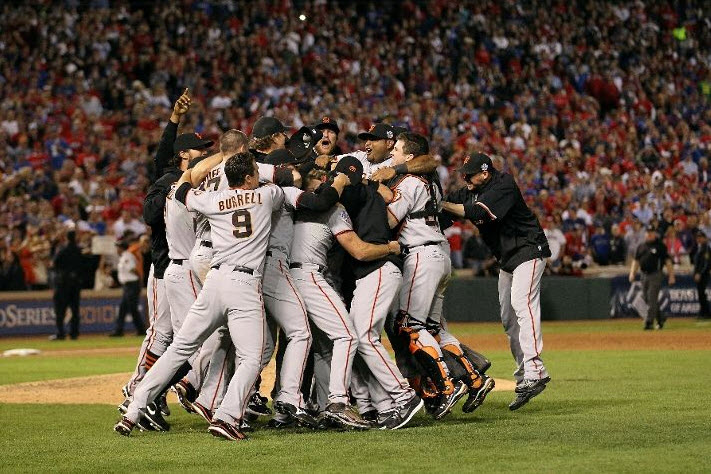
While YES! specializes in coaching the outfield, we remain convinced it's a full-team effort that leads to the most heart-warming victory celebrations.
Wes

Click the picture to see and hear the corny, exasperating routine.
Abbott and Costello’s team lineup starts with "Who’s on First" and concludes with ‘I Don’t Give a Darn’ playing shortstop. Throughout this classic and corny routine, Abbott keeps hurling screwball names that his sidekick Costello can't quite catch.
It’s time we take you out to the ball game for another look at the American Church. But we're not buying you peanuts and Cracker Jacks! It's game time, and you're on the team. Suit up quickly for our Team of the Decades.
Positions already have associated numbers, which we'll correlate with each decade of life. Right off the bat, we’re assigning you to your field position based on your decade. (Try this at your next all-church picnic!)

Battery
Pitcher (1) - 1st Decade (age 0-9) "Tomorrow"
Catcher(2) - 2nd Decade (10-19) "Today"
Infield
First Base (3) - 3rd Decade (20-29) "Who"
Second Base (4) - 4th Decade (30-39) "What"
Third Base (5) - 5th Decade (40-49) "I Don't Know"
Shortstop (6) - 6th Decade (50-59) "I Don't Give a Darn"
Outfield
Left Field (7) - 7th Decade (60-69) "Why"
Center Field (8) - 8th Decade (70-79) "Because"
Right Field (9) - 9th Decade+ (80+) (sorry, nameless!)

Got the picture? Know your position? Got your cleats and glove? We're ready to play.

Usually when baseball is used as a metaphor in the church, we're taken only around the base path. Too often the outfield is forgotten or ignored.
Part of our mission is making sure the outfield stays in the game. Think about it. How would your favorite team fare if we eliminated the outfield positions?
They may get lucky, survive, or even thrive an inning or two without a ball going beyond the infield. But chances are good they’d soon discover how necessary these players are, both on the field and at the plate.

Ironically, though, the two infield positions at the start and end of Abbott and Costello's routine are the ones in trouble. The American Church is currently losing the most momentum at First Base (third decade, 20-29) and Shortstop (sixth decade, 50-59).
Churches are not quite sure Who's on first anymore, and "I Don't Give a Darn" shortstops are leaving the stadium in record numbers.

Imagine for a moment that you’re an outfielder on a team where the first baseman and shortstop walk off the field. You’re very concerned, right? You know instinctively how important every position is to achieve victory.
It’s always a team effort. You wouldn’t simply ignore the problem because your outfield position is well covered or because you're not the team's manager. The infield vacancies would have your full attention.
What’s troubling is that we don’t often see a similar level of cross-generational concern within our churches, in either direction. We’re insulated within our peer groups to the point we sometimes lose sight of the whole team. Or we trust it's someone else's job to look after the other positions on the team.
We may not even be aware Who the first baseman is, and We Don't Give a Darn that the shortstop is missing. We sometimes completely forget that there's a game going on or that we're playing to win (souls!).
At best, only twenty percent of Christ-centered churches in America are growing. We know this doesn’t automatically translate to a 20 and 80 win-loss season for the Church, but shifts in our game strategy are needed---of Biblical proportions! Non-integration leads us down the basepath of disintegration.

We're on the winning team, but we’re not playing like World Series champs or even mature team players.
We need every generation to step to the plate.
We can’t settle for disharmony between the infield and outfield. We can't move the fences in and pretend the outfielders don’t exist or have only a secondary role on the team. Everyone must suit up and get on the field!
Coaching Advice for Team Leaders
Clearly every position/decade needs to be resourced if you want to play with a full squad. If you’re a leader called to help lead your team to victory, don’t settle for equipping only the pitcher, catcher and infield. Or, by contrast, don’t resource only the outfield.
Make sure your church's budget reflects concern for the whole team. Treating outfielders or anyone else on your team as self-sufficient or unneeded will breed generational isolation and discord.
Short on resources? Instill in your players a deep passion and concern, not just for their own interests, but also the interests of others. Your existing players are your best and most cost-effective resources to address gaps in your lineup.
Invest in enhancing relationships between the decades. Don't pour ALL your prayer, time, energy, money and other resources into age-specific programs that keep generations separated.
Encourage intergenerational leadership for all age-specific ministries, including your older adults.
For those of you working with adults in life’s second half, don’t lose sight of your call to equip believers for the work of the ministry. The game is not over! Don't center all your activities around the dugout or the seventh inning stretch. Don't give credence to the notion that retirees belong perpetually to the off season.
Keep your team on the field, and for heaven's sake, invest in their ministry potential!
Work diligently to fill all vacant slots on your roster. Get the whole team involved, from oldest to youngest.
Invite YES! to help you shift your strategy so that your part of the team is better integrated with the whole team.
We want to see ‘Who’ back on first and ‘I Don't Give a Darn’ adopting a better attitude and scooping up grounders at shortstop!
Collaborating with the infield, YES! helps church and ministry teams
inspire the outfield to serve and make disciples.
(YES! Mission Statement---NAPV---New American Pastime Version :)

Tip-a-Canoe and Titus 2
Is there anything inherently wrong with lopsidedness? As long as people are getting saved and nurtured in their faith, shouldn't generationally lopsided churches be celebrated? So what's the big deal if our canoes tip dramatically to the side of a particular age group? 'Whatever floats your boat', right?

Although our kids might think otherwise, we weren’t around in 1840 when William Harrison of the Whig party became our ninth president. He was catapulted into office by a sagging economy and by a catchy campaign song, Tippecanoe and Tyler Too.
Tippecanoe is a river in Indiana, the site of Harrison’s military victory over the Shawnee Indians in 1811. John Tyler, in his early fifties, was Harrison’s running mate—the younger candidate in the campaign jingle.
Harrison, our oldest elected president until Reagan, died at age 68 on just his 32nd day in office—not our finest example of being young enough to serve! He was better known for his presidential campaign rather than accomplishments in his shortest-ever, truncated term of office.
For campaign naysayers who had argued that Harrison was too old to serve, his early demise left them feeling quite prophetic.
Life expectancy then hovered around 40 years---so in reality 68 was pretty old. Average life span in America has since doubled.
While Harrison succumbed to pneumonia complications (and didn't necessarily die of old age), his death still points to the wisdom of intergenerational pairing in leadership. With the younger Tyler ready to step in, the Whig party's influence in the office of the President stayed afloat. Tippecanoe tipped, and the younger Tyler took the helm as our tenth president.
Leaving this short history lesson from a couple centuries ago, let’s paddle our canoes back a couple millennia. The new lyrics may seem a bit over-the-edge, but you’ll soon catch our drift as we venture on with ‘Tip-a-Canoe and Titus 2.’
Is Your Canoe Tipping?

Tipped canoes? We see a lot of churches with lopsided congregations, favoring an older or younger demographic. Turns out, the word “lopsided” is actually a nautical term, describing a tilt to one side. It favors one side and droops (like the ear of a lop eared rabbit) accordingly on that same side.

Wait! Is there anything inherently wrong with lopsidedness? As long as people are getting saved and nurtured in their faith, shouldn't generationally lopsided churches be celebrated? So what's the big deal if our canoes tip dramatically to the side of a particular age group? 'Whatever floats your boat', right?
(Before insisting I'm all wet, let's acknowledge that there are some strong, generationally lopsided churches reflecting the demographics of their communities. Intergenerational ministry may not always be practical, just as an intercultural mix is difficult to achieve in mono-ethnic communities.)
Sustainability is the most commonly mentioned concern for older congregations. Will the church still be around in ten to twenty years, or will the church simply dissolve as the elderly die off?
And on the younger side of the age wave, what's ahead for young adults when they begin celebrating birthdays beyond their church's targeted youthful demographic? Do they simply follow a new current to another church that targets a slightly older age group?
While sustainability is certainly a concern going forward, we're missing the boat if we think primary dangers lurk only years downstream. Truth is, the water can get pretty murky right now in our peer-only ponds.
Missing out on generation-to-generation dynamics (in both directions) should be a great concern for all of us. "I have no need for generations apart from my own" conflicts with how God designed His Church. This declaration of generational independence limits our perspective, development, outreach and joy in the present, both personally and corporately—while moving us closer to treacherous rapids for the ride ahead.
Balancing Our Boats
Although I haven’t spent much time in canoes, I did compete on the rowing team in college at Seattle Pacific. Rowing in a four- or eight-man shell is an ultimate team sport—with no superstars. In fact, standing out is not a good thing in races that demand synchronized movement and sustained power from every oarsman— first with the legs, then lower back and finally with the shoulders and arms to finish the stroke.

If a racing shell (or canoe) tilts to one side, you know instinctively something is wrong. Imbalanced vessels do not win races. And you don’t counterbalance by adding extraneous weights to the opposite side of these sleek shells. The source of the problem is usually human behavior.
In rowing, even a slight turn of the head creates imbalance. Heads and torsos must stay centered, with eyes fixed straight ahead, attentive to the commands of the coxswain. As the smaller framed leader without an oar, the coxswain is the only one facing in the direction the racing shell is headed. Guiding with a very loud and commanding voice, he or she keeps the team in rhythm and on course.
Timing is critical. An oar submerged for an extra split-second can cause a disruptive event known as “catching a crab.” The oar blade gets stuck in the water, while the handle of the oar smacks the oarsman in the sternum. The racing shell quickly tips to the side of the submerged oar and embarrassingly sputters to a crawl, while teammates mutter unmentionable words in disgust.
In an instant, the prospects of winning that race all but disappear.
Titus 2
So, both Tippecanoe and tipped canoes demonstrate a clear need for balance, but who asked young Titus to come aboard?
Empowering Titus with coxswain-like authority, the Apostle Paul lays out a compelling racing strategy in Titus Chapter 2. His counter-intuitive, God-ordained plan offers balance. It helped avert generational lopsidedness in the Early Church, and we think this plan still has merit today.
Paul the elder asks
Titus the younger
to teach the older
—so that they can influence the younger.
With the rhythm of this back-and-forth, older-younger/younger-older leadership paradigm, no single generation dominates the boat from bow to stern, or from port to starboard. It’s truly a team effort, with everyone pulling together.
Notice the breadth of Paul’s language in Titus 2: WHOLESOME teaching, honoring God in EVERYTHING you do, bringing salvation to ALL people, TOTALLY committed to doing good deeds.
We easily recognize Paul's coaching toward wholehearted commitment. What we Americans seem to gloss over, though, is the intentional inclusion and interaction of each generation with other generations. Each generational part is engaged with the whole—with clear understanding that body parts are not meant to be whole by themselves!
Every generation has strategic value beyond its own generation. In mainstream American church contexts, we often emphasize wholesome and wholehearted love within generations but less commonly between them.
Titus 2 encourages us to strive for wholesome living within a wholesome church paradigm in which every generation impacts other generations. The older become role models for the young, and the younger Titus is instructed to offer both encouragement and spiritual challenge to the older, including admonitions to correct older adult behavior.
Staying in the Race
For several years in his twenties, one of our sons attended a young and vibrant church focused on Twenty Somethings. As he began to approach thirty, though, he started feeling a bit in the margins and out of sync.
Fortunately, church leaders began to recognize the shortsightedness of their over-emphasis on a singular age target—especially with a void of seasoned mentors. Wisely, they have since made a deliberate shift toward an intentionally intergenerational approach.
As we propel through life's seasons, many of our personal identities won't change (e.g. birthdate, birthplace, ethnicity, gender), but our age number, attaching like a barnacle to the side of our boat, keeps getting bigger until the day we die.
Church hopping/shopping every couple decades makes sense if we are called to be independent, self-centered, consumer-driven adults, looking for the perfect environment for each stage of life. In many ways our market-segmented culture can lead us down this tributary, but it conflicts with God's bigger picture and better plan.
As we grow older, we can't allow younger generations to become invisible to us, nor do we want to become irrelevant or invisible to younger generations. We all share an innate need to be valued and to glean from others—at every age and stage of life.
In spite of our generational differences, we're all in the same boat and benefit by winning this long race as a cohesive team. Let's move beyond the tipped canoes of generational favoritism or isolation, synchronizing our oars with the broader Christ-centered reach found in Titus 2.
“When we all pull together, how happy we’ll be! ”
We sang that song as kids—now let's practice it as adults!
Be a steady oar in your church, with your eyes fixed on Jesus—pulling not just for your side of the boat but for the whole team.
Let's row, row, row our boat together---courageously down the stream.

We Have Met the Enemy, and He is All Three of Us!
Let's take our punching gloves off for a moment and yank at the plank in our own eyes. Hitting the pause button on our rants, let's pretend that WE in life's second half are our own worst enemy . . . all three of us: Me, myself, and I.
It's hard, I know, but we can do this!
Have you ever noticed how quick we are to point out the faults of others, and how slow to admit our share of the blame for what's wrong in today's culture?

Take traffic for example. We readily complain about traffic when caught in a traffic jam. Do we realize that we are the traffic everyone else is complaining about?
And, it has become way too predictable on Capitol Hill. Republicans rant about Democrats, and Democrats rant about Republicans. The blame always seems to rest outside of ourselves.
My father-in-law, Don Popineau, was a residential house painter and an active deacon in his church before becoming an ordained minister in his early fifties. He jokingly told a group of pastors, "I've only been a pastor for three weeks, and already I hate deacons!"
Okay, so where are we headed with this conversation?
Approaching the end of our seventh year with YES! Young Enough to Serve, we've heard our share of rants about tech-tethered teens, not-so-sacred worship, theatre-like sanctuaries, and even about hipster pastors dressed in jeans, seemingly siding with the young while snubbing the old.
But let's take our punching gloves off for a moment and yank at the plank in our own eyes. Hitting the pause button on our rants, let's assume (or pretend) that WE in life's second half are our own worst enemy . . . all three of us: Me, myself, and I.
It's hard and out-of-character, I know, but we can do this!
“How can you say to your brother, ‘Let me take the speck out of your eye,’ when all the time there is a plank in your own eye?”
Enemy #1: ME-Mastered Retirement
We live in a nation that nourishes an entitlement perspective regarding vocational retirement---usually in our sixties, followed optionally by a life of leisure. Some ask, "Is retirement even biblical?"

Well, retirement shows up in just one verse, Numbers 8:25, where the Levites had to retire at age fifty. (Whew! . . . a big sigh of relief from those of you who are vocationally retired!)
While vocational retirement is not taboo in Scripture, it gets very little press.
What is not supported biblically is spiritual retirement, freedom that becomes lazy or self-absorbed, or personal identity grounded in retirement. Not a single verse or chapter support that kind of retirement!
renewing purpose
Let's face it, retirement sounds a bit tired, and it's a lonely word in Scripture. Pop the word 'renew' in your Bible search engine, and you'll find it's much more popular and life-breathing!
We're called to liberty and renewal. Through love we get to serve one another---often even more when the eight-to-five grind ends.
Enemy #2: MYSELF-Mirrored Segregation
This enemy highlights how generationally isolated we've allowed older adults to become in our culture---and sometimes even more so in our churches.

Year-after-year we grow comfortable peer-to-peer, but too often miss out on relationships from generation-to-generation.
We're disturbed by the cocoon or silo approach we find ourselves in, often a picture of only older adults caring about older adults. Are we going to settle for being an amputated body part? (We can't change what we're resigned to tolerate.)
From Paul's teaching in 1 Corinthians 12, the whole body needs to show concern for each part, and each part needs to show concern for the whole body. The head cannot say to the foot, "I have no need of you."
Paradigms need to shift to re-align with Scripture. It's not just about becoming more culturally relevant, attractive and creative. These are byproducts of love flowing in a healthy way from generation to generation (in both directions!). The Bible makes it clear that God wants more than each generation fending for themselves.
Specialized life stage ministries have value, but peer-only approaches leave us with huge generational gaps, nonstick faith as students graduate from high school, and Teflon-coated church attendance as parents become empty nesters.
energizing hearts
We can move some hearts and change some lives peer-to-peer. But to really change a paradigm, we need reinforcements from outside that paradigm: younger generations, saints cheering us on from heaven, and, of course, the Holy Spirit.
We handicap ourselves when we ignore the help of younger, more energetic hearts and minds, along with wisdom from the great cloud of witnesses who have gone on before us. Included in that cloud are poignant examples of the older Paul collaborating with the younger Timothy and Titus.
Helping churches build leadership teams with a broader age swath is a good starting point to combat enemy #2. YES! would love to help you broaden your team.
Enemy #3: I-Centered Salvation
Salvation from sin and the personal promise of eternal life are incredible. You and I as individuals are valued tremendously by God. The Father sent His only Son to redeem us.
But this wonderful redemption plan wasn't intended to stop with just us. We've been redeemed so that we might reach others.
Most American Christians admit to passing up the multiplication tables, opting for a quieter, noncontagious faith. For older, mature Christians who have experienced God's faithfulness over a lifetime, what a travesty when our light is hidden!
redeeming lives
If we're well grounded but not making disciples, what can we do?
One approach is conveniently convincing ourselves that evangelism and disciple-making are outside our wheelhouse of giftedness.
Another ill-advised approach involves beating ourselves up to the point where we add discouragement, guilt and timidity to our ineffectiveness.
The better approach is confessing our sin and asking God to help us become bolder and more deliberate in helping others in their faith journey. Then we look for situations where we can connect with those who are:
- without faith,
- new or weak in their faith,
- or lost in a faith without Christ.
Jesus needed to be around people like this in His life here on earth. We need these people in our lives too.
Candles lit only in bright sunlight make little sense. You are still young enough and bright enough to light up a dark room!
Me, Myself and I
So there you have it. Three temptations 'me, myself and I' might encounter in life's second half: becoming too retired, segregated or noncontagious.
A year ago most of us were blissfully unaware of Ebola and ISIS. They have since become familiar, formidable foes. Apart from praying, though, most of us will at best offer indirect help to those combatting these horrific enemies directly.
But with God on our side we can wage war directly with 'me, myself and I'. We know this enemy inside and out. And this too is a battle we must win!
“Lord, please penetrate our hearts and help us take the steps we need to move beyond ourselves—-so that our lives and the lives of others will be made whole. Amen.”

How Did It Get So Late So Soon?
"How did it get so late so soon?
It's night before it's afternoon.
December is here before it's June.
My goodness how the time has flewn.
How did it get so late so soon?”

You gotta love Dr. Seuss!
Some of you enjoyed having others read his books to you as children, then later reading his stories to your kids, grandkids and perhaps even great grandkids.
As more days, months and years pass, we’re pinching ourselves, "Can we really be this old already?"
So we may agree it's late, and late came faster than most of us expected.
The next question, "What are we going to do about it?"
We see a couple extremes in prevailing attitudes.
"It's late. Turn out the lights. The party is over."
"It's late. Turn up the lights. My remaining time is precious. Let's not waste these moments. God still has a powerful purpose for me in the twilight."
Usually there's quite a bit of good livin' between 'it's late' and 'you're done.' Sometimes we have to plow through major obstacles to remain purposeful. Things around us are changing rapidly, bodies are wearing down, and older adults can often start feeling abandoned.
It's easy to see why and how some people quit before the finish line, but God wants us to press on and give Him our best to the very end.
What Will You Build?
We love Psalm 71:18 (NLT):
“Now that I am old and gray, do not abandon me, O God. Let me proclaim your power to this new generation, your mighty miracles to all who come after me.”
The first half of the verse introduces life’s second half challenges. And the verse’s second half highlights purposeful, God-honoring interaction with younger, first-half generations as a key to the psalmist’s salvation.
We face an important choice. Build a generational wall and live out the old and gray years with the fear of abandonment. Or build a bridge that proclaims God’s glory to younger generations.
The psalmist had to push through some challenges - feeling old, gray, and abandoned - to get to his 'so late so soon' purpose.

Some of your 'new generation' purpose may sit across from you at the dinner table as grandkids or other young friends come to visit. Some might be in the lobby of your church or serve you across the counter at your bank, grocery store or restaurant. And some you may never know this side of heaven.
You have powerful, God-honoring life stories to share. Take time to communicate them now directly and through writing, video or audio recording---while you still have strength and clarity of thought.
Don't forget how much inspiration came into your life from those who were gone long before you arrived on the scene! (Like every Biblical writer, for instance!)
Welcome Generation X
It’s hard to believe the last of the Baby Boomers turned 50 in December 2014! Generation X began joining the 50+ fraternity in January 2015!
Frankly, many churches with specialized ministries for adults on the plus side of fifty weren't quite ready for Boomers, and most are certainly not ready for Gen Xers. Again . . .

And, of course, fifty is not really SO late. And we don't believe there's a huge contrast between someone turning 50 in December 2014 vs. January 2015. These generational labels are our culture's attempt to make sense of generational nuances.
What we do believe is that connecting older generations with younger generations is key . . . for Gen X, Boomer and Builder generations. Let us proclaim His power to the next generations, His mighty miracles to all who come after us.
A Rapidly Aging America
America is aging and will be for the next several decades. (The 65+ population is on track to more than double between the 2010 and 2050 census, from just over 40 million to just under 90 million!)
Others can reinforce our getting stuck in the first half of Psalm 71:18 by isolating the aged and viewing aging only as a major personal and societal problem.
And we who are older also run the risk of viewing younger generations only through problematic lenses. This near-sighted myopia keeps us from moving beyond the first half of the verse---and makes us feel more and more obsolete, colorless and forgotten over time.
But there is a better option. We can push through negative generational stereotypes and trust the Lord for fresh opportunities. Again, building a bridge to Part B:
“Proclaiming His power to this new generation, His mighty miracles to all who come after me.”
God’s awesome power has never depended on our age or physical strength. In fact, His power can become even more visible when the batteries on our aging clock run low.
It’s still early enough. And you are still young enough to make a mighty difference for Christ in the lives of others.
So late . . . so soon . . . and so many young lives yet to impact with God’s powerful love!

Cruising Through Icy Waters
DO YOU EVER FEEL LIKE YOU’RE WORSHIPPING GOD ON THE DECK OF THE TITANIC?
While we’re ultimately heaven-bound and on the winning team, what about the ship on which we’re currently sailing? Is it going down? Is it enough to just have faith that our ship won’t capsize---despite some alarming downward trends? Will current victories get swallowed up in a cold sea of systemic failure?
Do you ever feel like you’re worshipping God on the deck of the Titanic?
While we’re ultimately heaven-bound and on the winning team, what about the ship on which we’re currently sailing? Is it going down? Is it enough to just have faith that our ship won’t capsize---despite some alarming downward trends? Will current victories get swallowed up in a cold sea of systemic failure?
The Church in most areas of the world is thriving, both spiritually and numerically.

But we’ve witnessed the Church of Europe sink, with only its cathedral towers now jutting above the surface. Is a 21st century model of that proud and headstrong ship, with Americans on board, beginning to collide with another iceberg? If so, can God help re-direct our course?
Sinking on the Promises of God
We love standing on God’s promises, at least those mentioning future blessing. But what about promises with negative outcomes, those foretelling curses and destruction? Not so much.

As the Titanic sank, the ship’s band continued to play hymns. Are we in concert with those humble, dedicated and competent band members, determined to hit all the right notes and soothe the passengers? Are we as well serving on a ship destined to sink to the ocean floor?
The last verse of the Old Testament (Malachi 4:6 NIV) promises that the land will be struck with total destruction if we neglect two critical turns of the heart. One turn is older-to-younger and the other younger-to-older. Both turns require that we move beyond our own generation.
1) Parents turning to their children---AND---2) children turning to their parents.
And it's not just deadbeat dads and prodigal sons needing a turn of the heart. While some need to rotate 180 degrees, there's room for all of us to continue pivoting.
When YES! Young Enough to Serve was birthed seven years ago, we noticed how so many American churches operate in models where only older adults seem to care about older adults. Youth ministry leaders were at the same time seeing the folly of peer-only relationships in youth groups.
Is the American Church short on: Resources? Generosity? Buildings? Worldwide outreach? Responses to social injustice? Generational specialization? We don’t think so.
Do we pour boatloads of resources into children and youth ministry and a comparative thimble into ministry at the older end of the age spectrum? Perhaps so.

But comparing investment buckets can lead us down a path of envy, losing sight of the bigger picture. It’s like the Titanic band director comparing his need for a trombone with how much the kitchen spent on fine china. Meanwhile the ship is sinking, and there’s a shortage of lifeboats.
Which brings us to the purpose of this post. Generational investment buckets aside, we need to focus more intentionally on the love and concern flowing between generations. If churches and nations ignore this dynamic, the message is clear . . . the land will be cursed.
YES! provides leadership nationally---modeling and teaching collaboration between generations:
Collaborating with younger generations
YES! helps churches and ministries
commission adults over fifty
to serve & make disciples.
When generations collaborate, great things are possible (and sustainable!).

If generations remain insulated and indifferent toward each other, we’re back on the deck of the Titanic. The music may be playing, but the ship is going down. God keeps His promises.
Honestly the ocean of need is huge, and the YES! ripple is small but growing. We need to multiply our team, intervene earlier, strengthen training resources and reach captains at the helm. We can’t just settle for more soothing hymns on the deck.
As Christians we are called to love, serve and multiply both inside and outside our peer group. For too long we’ve invested heavily in generational division---with unintended consequences.

Appealing to the Younger Side of You
Truth is, you have a right and left side of your brain, and they are precisely your age. Neither side is younger or older, and both sides of you can be very engaging!
Did you know that you have a younger side and an older side?
Your younger side tends to be more playful and curious, your older side more serious and introspective.
Actually, I just made that up. Don’t believe it for a minute! I'm highlighting how easily we can slip into positive 'young' stereotypes and comparatively negative ‘old’ stereotypes in our American culture. We view ‘young’ as more fresh and alive and ‘old’ as being less fun and more isolated.
Truth is, you have a right and left side of your brain, and they are precisely your age. Neither side is younger or older, and both sides of you can be very engaging!
On the other side of the Pacific, Eastern cultures might characterize your younger side as “immature and impulsive”, while the older side of you “oozes with wisdom and is worthy of honor.”
So, to experience the best of both worlds, we could recommend that you spend your childhood in America and eventually retire in Asia. :)
Without switching residences, though, we think it’s possible to experience the best of both worlds.
Look for the best in those younger than you
Appreciate their youthful spontaneity and curiosity. Try emulating what you love about them, no matter what your age. As you grow older, don’t let go of these positive qualities. With God at work in you, you are young enough to be fresh and stay fresh.
In the New Testament (Titus 2) Paul told Titus to teach older men to live lives (in the present) that are worthy of respect. As we get older, we may think our advancing age alone is deserving of carte blanche respect, but God wants us to give people more ammunition than simply our longevity.
Young Titus was also asked to teach older women not to slander. As we get older, we must resist the temptation to slander others. Slander is not an entitlement of older age. We must learn to hold our tongue. (Yes, Virginia, there is a slander clause!)
Look for the best in those older than you
Appreciate their life experiences and lessons learned from their living on this planet for years or decades longer than you. You will grow wiser as you appreciate their stories and perspective. You are old enough to be wise.
For those of you well under fifty, don't sell yourself short by thinking your influence is limited to your peer group and younger. You, like the younger Titus, can have a HUGE impact in the lives of those older than you. Watch the countenance of older adults light up when you go out of your way to connect with them---valuing them just like you hopefully want them to value you.
We’re convinced that God loves every generation deeply. And the more we practice doing the same, the more we reflect His character.

The Castaways
Stay cutting edge but don’t leave Herb & Mabel on the cutting floor, feeling edgy and edged out. Their eight tracks are perishable commodities, but they are imperishable.
Young Enough to Serve or Old Enough to Sever?
Pastors and churches have a right and responsibility to shut down Herb & Mabel Castaway’s eight-track tape ministry that is no longer reaching anyone.
But where do Herb & Mabel go from here? This depends largely on their level of spiritual maturity and also on how attentive their pastors and leaders are to their continuing need for usefulness in God’s kingdom.
We have witnessed Herb & Mabel, with superglue on their baton, fighting until their last breath to hang on to their now antiquated ministry that God birthed in their hearts back in the seventies. They may have already left your church, hurt and angry, taking their eight-tracks and tithe dollars with them. And, except for their tithes, you’re more than happy to let them go---to a less progressive and dying church down the street. Or we might find them sitting at home watching another church on their big box TV (the one with the rabbit-ears antenna).
We have also seen some Herbs & Mabels reluctantly accept their own obsolescence and conclude that their days of serving the Lord are basically over. They remain part of your church but feel deflated and useless as your church’s senior adult bus whisks them off to see the lilac fields in bloom.
Herb & Mabel are part of the tech-less minority. We support missionaries passionate about reaching out to poor and forgotten folks like them across the globe, but we tend to ignore, blame and marginalize them here at home. They should have changed with the times! Yes, that’s true, but they didn’t---even under your brilliant teaching and leadership. Now faithful missionary supporters Herb & Mabel find themselves in the fraternity of a hidden people group here in America---not unreached but invisible and expendable.
Maybe there’s a better way. Can we help Herb & Mabel shift gears and make disciples? Can we think creatively about their potential to reach out to others, including people like themselves still living sans 21stcentury technology? You know, people on the fringes---the neglected ones Jesus chose to hang out with and surprise with His love.
Equip them with basic toolkits to personally visit and share your weekly podcasts with shut-ins in your community who have no computers. Have them serve as class grandparents at your Christian school or kids’ church, and be sure they include a colorful lesson using ancient eight-track technology. (Throw in phonographs, reel-to-reel and cassette decks---and they’ve got a ready-made four-week series that will fascinate the kids!) Do some reverse mentoring, where youth in your church help Herb & Mabel with some basic computer skills.
Stay cutting edge but don’t leave Herb & Mabel on the cutting floor, feeling edgy and edged out. Their eight tracks are perishable commodities, but they are imperishable.
The head cannot not say to the foot, “I have no need of you.”
Of course not! You’re their leader, and you’re not going to let that happen!

Visit Ageless Faith on the YES! resources page for a two-part podcast pertaining to this article; 051 AND 052.

Preaching to Papa- and Gram-To-Be
Grandparenting is not the time to circle the wagons and focus only on family. Nor is it a time to forsake our calling as grandparents for the sake of reaching the world.
At any moment Judy & I will become grandparents for the first time.
I expect a euphoric rush of emotion, realizing that life as we currently know it will never be the same again---for Judy & me, and for Peter’s parents, John & Barbara---as our first grandchild enters this world.
Peter & Heather have picked out a name, but we don’t even know his name yet. This grandson is about to change our identities and give us new names, including some of our kids being called Uncle and Aunt for the first time---and Judy's parents adding the Great prefix.
So in this first week of August, before I hold him for the first time or call him by name, I will take a brief moment and preach to ourselves a message we’ve shared with others.
- Being grandparents is an awesome privilege and responsibility, one we now accept with joyful anticipation.
- At the core, there is an opportunity to pass on a spiritual blessing to a new generation within our families. This is flesh of our flesh---and so much more!
- While we will no doubt become preoccupied and obsessed with this new cutest-ever grandson, we must continue to turn our hearts two ways, both inside and outside our family. Our love for our grandson will not diminish our love for others, nor will our love for others diminish our love for this grandson. Grandparenting is not the time to circle the wagons and focus only on family. Nor is it a time to forsake our calling as grandparents for the sake of reaching the world.
- All of us as Christians, with or without children/grandchildren of our own, have the opportunity to become spiritual parents and grandparents in the lives of others. We can all be fruitful and multiply---a truth that should fill us all with joyful anticipation.
We look forward to the day when our grandson personally commits his life to Christ. And we commit him from the very start into the loving arms of Jesus, as the One who will call him to become both a disciple and disciple-maker.
Thanks for allowing us to share this part of our journey with you. We know in part what others have talked about. It’s about to become real!
Jesus, please help lead and guide us as we take on this new mantel of responsibility and bundle of joy! And may the fruit of Your Spirit continue to flourish beyond our family!
And as a postscript: our grandson finally arrived thirteen days beyond his original due date. And we know his name:
Ethan Wesley Burke
How special is that?! That's him in the top shot! And an updated shot below.
Papa Wes


777 Local Church Lessons
When local churches come up short of the runway, are we vigilant enough in learning the hard lessons?
For a couple weeks earlier this year, cable news channels had us glued to the mysterious disappearance of a Boeing 777, Malaysia Airlines Flight 370. Answers appeared imminent as “Breaking News” flashed repeatedly across the screen.
But with no new discoveries, reports on this disappearance also disappeared. Our shallow attention spans wanted to quickly discover answers and solve the mystery. Months have now passed without resolution, so we move on to other mysteries of life, while others patiently comb the deep ocean floor.
One year ago you may have seen video footage of the first fatal crash of another Boeing 777, Asiana Airlines Flight 214 from Seoul to San Francisco. While shocking and closer to home, this story fell off our radar more quickly. It was not an unsolvable mystery. With three fatalities, though, it was both heartbreaking and miraculous.
As the story of this San Francisco fair-weather crash unfolded, it was hard to miss parallel flight patterns we see in some American churches.
Unfortunately, too many churches crash and burn in many ways similar to Flight 214. Mistakes are inevitable but don't have to end with fatalities.
When local churches come up short of the runway, are we vigilant enough in learning the hard lessons? Given the high number of repeat incidents, it doesn't appear so.
We can learn something from the painstaking, independent approach of the National Transportation Safety Board. In the end, they are less consumed with finding a singular scapegoat and more about discovering multiple solutions that could have helped avert such a tragedy.
Young Apprentice With the Wrong Approach
The inexperienced pilot landed just short of the San Francisco airport runway, clipping the landing gear on the seawall and performing cartwheels on the runway, before the aircraft stopped and then burst into flames.
Although pilot error was involved, the crash assessment didn’t focus entirely on young pilot ineptitude. He had technical credentials to fly that aircraft, but better in-flight mentoring and other safeguards could have helped prevent the fatal crash.
An NTSB representative observed, “The flight crew over-relied on automated systems that they did not fully understand.”
And, similar to failures we see in some churches, it wasn’t an immediate nosedive. It was a slow descent and a sustained pattern of downplaying vertical relationships. The horizontal coordinates were spot on. They were headed for the center of the right runway at the correct airport. But the aircraft was losing altitude too quickly and not making speed adjustments. Last second corrections were too late.
We're blessed with opportunities to trust young pilots and young pastors. This crash assessment didn't give up on youth and inexperience but highlighted related factors that contributed to the shortfall:
- Overreliance on technology,
- Vertical relationships ignored over a sustained period of time, and
- Inadequate mentoring and monitoring.
Some churches lose altitude because young leaders lack engaged mentors with significantly more accrued flight time. This can lead to over-reliance on peer counsel, autopilot technologies, and figure-it-out-on-the-fly strategies. Each of these has value but should not stand alone in navigating.
Predictably, when vertical relationships between generations are ignored or under-valued, neglected generations begin jettisoning their engines. This often leads to losses of resource, power and momentum. Last-minute efforts to save the descending church may come too late.
Approaches outside Biblical best practices that ignore the value of vertical relationships and over-rely on latest technologies can be fatal to our churches. Let’s address those blips on the radar early−−−before clipping our landing gear and triggering disaster.
Safety Slides Nearly Suffocate Flight Attendants
Even after all the mandatory evacuation drills, disasters don’t go as planned. Two flight attendants, the ones who show passengers how to apply air masks in an emergency, nearly suffocated.
Two safety chutes inflated inside the aircraft, instead of outside, enveloping two flight attendants. Using a dinner knife and an axe from the cockpit, flight crew members punctured the slides and saved the attendants’ lives.
Things meant for good, turned inward, can begin smothering people in our churches. Key leaders may be suffocating inside the Christian bubble we've inflated.
If we get too full of ourselves, even great worship and teaching can leave us oxygen-deprived. Let's free leaders up to serve in the marketplace---as our friend Jon Sharpe instructs, "commissioning not capturing." We may even need to axe some programs inside our church walls, encouraging people to fill their lungs with fresh outside air as they fulfill the Great Commission.
Emergency Vehicle Runs Over and Kills Crash Survivor
In our zeal to save others, are we inadvertently running over people?
In the most tragic twist of fate from this crash, a young woman from China, lying injured on the runway near the aircraft, was run over by a rescue vehicle. How terribly sad, after surviving this horrific crash, for this young woman to be killed by a vehicle dedicated to putting out fires and saving lives.
Our specialized ministries are important, but we must avoid tunnel vision. Others we encounter along our way are hugely significant. Let's sit up and take notice. We have a mission that is broader and deeper than our specialized calling.
A Veteran Hero
Fortunately, in the midst of tragedy, we end with the heartwarming heroism of a veteran flight attendant, Lee Yoon Hye, who refused to leave the plane until she was sure all 305 survivors had safely exited.
We live in a turbulent world filled with needs, danger, grief and pain. Thank God for selfless believers of any age who look beyond just their own welfare and the welfare of their family, peers and closest friends---and care about the welfare of the whole Church---as well as those outside.
Let's be among the heroes whose eyes are fixed on Jesus and His flight plan, not willing that any should perish, but that all come to eternal life.
[When writing this in early July, we had no idea that there would be yet another tragic crash of a Boeing 777---Malaysian Airline Flight 17 on July 17. Thirteen months ago there had been no fatal crashes involving a Boeing 777 since their introduction 18 years earlier---now three fatal incidents since last July.
With 298 deaths, the crash of MH17 is the deadliest aviation incident since the 9/11 attacks. Our hearts break with all the friends and families involved in each of these three separate tragedies.
The two Malaysian Airlines crashes are clouded in mysteries yet to be unraveled. This article focuses on lessons learned from the less deadly of the three Boeing 777 crashes.]
Tale of Two Moms
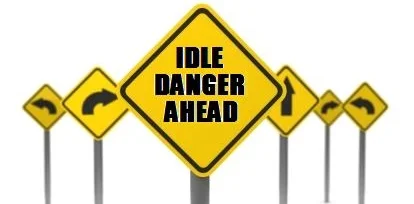
We’re often not doing enough to cultivate potential and to provide a clear early warning to those who might settle for the path of idleness.
The idle path may appear safer, but it’s actually more treacherous.
“YES just has to become a strong, national ministry!”
We heard this comment from a missionary couple from Arizona, who went on to share their tale of their respective mothers.
As they left several years ago for their overseas missions assignment, both of their moms were in their late sixties. One became a poster mom for what YES! Young Enough to Serve represents. The other became the polar opposite, literally pulling the shade on life and sinking into a deep depression.
As one mom approached age seventy, she decided to run for public office. And she won! After serving two years with distinction, she decided to shift gears and write her first book. She saw the silver lining in her empty nest and retirement years, a chance to do more for others and go all out for God.
The other Christian mom settled first into complacency and then despondency. Fear got the best of her, and her last days became very dark.
While no church wants to see older adults shift into despair, this missionary couple perceived that we’re often not doing enough to cultivate potential and to provide a clear early warning to those who might settle for the path of idleness.
The idle path may appear safer, but it’s actually more treacherous.
Thanks so much for standing with us as we seek to multiply the message and invest in leaders who will help adults choose a more fruitful path in their later years.
There's Gold in Them Thar Culls
In these later years of life, we do at times get set apart because we’re not shelf-ready in the eyes of consumers.
For a moment I am tempted to mutter, “Those stupid consumers who shop with their eyes!”---but then I catch myself, knowing that I’m often in that swarm of shallow shoppers.
Do you know what culls are? Do you know how valuable they can become?
While serving with a YES! team at Gleanings for the Hungry in Dinuba, California earlier this year, I had the privilege of connecting with local farmer Gordon Wiebe to glean from his inside perspective of the summer gleaning operation.
In Gleanings’ winter season we package dried soup mix, which is not technically a gleaning process. But as Gordon described summer and peaches, I couldn’t help but visualize winter and the older adults who come to serve during this season.
He shared that most of the fruit comes into Gleanings from packing houses, not directly from fields.
The fruit is bruised, scarred, blemished, hail damaged, in odd shapes and sizes, overly ripe, or with split pits—but not spoiled.
CULLS
People outside the farming community frequently use the word ‘seconds’ to describe this fruit, but farmers refer to them as CULLS.
Something culled is picked out and set aside. Culls are not inherently inferior or less nutritious on the inside. But packing houses won’t send them to market because of their size, blemishes, or stage of ripeness and because people shop with their eyes.
Gordon went on to say that our eyes often fool us. The best-looking, marketable fruit may or may not be the best tasting or most nutritious.
Gleanings is all about giving fruit a second chance, and summer volunteers can attest there is quite a production redeeming the peaches, eventually sent out as dried fruit.

Because of what happens to the fruit at Gleanings, it lasts longer, travels much farther, and helps meet deeper needs both physically and spiritually than shelf-ready fruit. (The exported food is always tied to proclamation of the Gospel. And in the end, food from Gleanings is consumed by hungry people who appreciate it more than we can imagine.)
When a shipment of very mature, overripe peaches arrives, Gleanings makes sure the volunteers and conveyor belts shift into high gear. If this fruit sits idle, it will quickly become mushy and unusable for the purposes intended.
HOPE FOR THE OVERLY RIPE
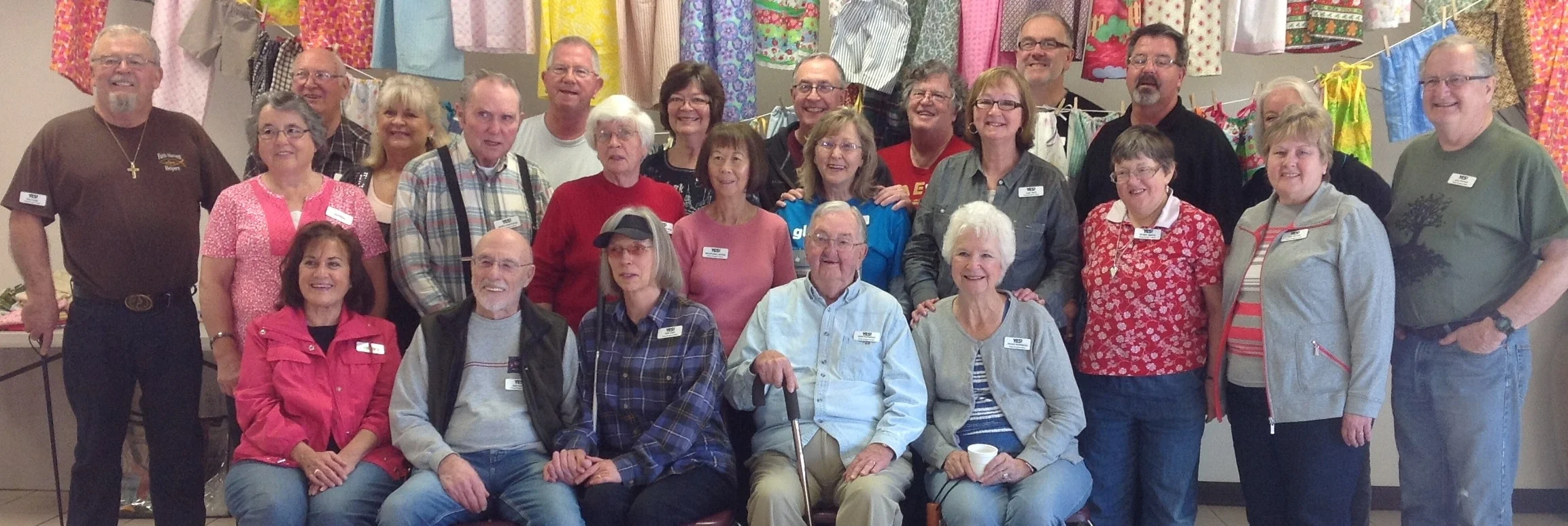
What wonderful parallels to our YES! team and other ‘overly ripe’ individuals serving with us. Our colorful crate of culls---up to 86 years ripe, some with canes, limited sight, special needs, physical challenges, and even split in-the-pit relationships---prepared two million servings of soup for shipment and made thirty quilts in the four and a half days we served!
In these later years of life, we do at times get set apart because we’re not shelf-ready in the eyes of consumers.
For a moment I am tempted to mutter, “Those stupid consumers who shop with their eyes!”---but then I catch myself, knowing that I’m often in that swarm of shallow shoppers.
I'm convinced that we're often too quick to slap on the 'ageism' label. Could it just be a reality of the aging process, a season when God is eager to redirect our path? Is He wanting to open our eyes to value not immediately recognized by American consumers? Value that we ourselves might have skipped over in earlier years?
The labels of 'old', 'senior', and 'elderly' do not in themselves constitute ageism—in fact, many cultures certify these crates with special seals of honor, lush with value and respect. The trouble comes when we make the wrong assumptions about these 'Son-kissed' brands. We can waste energy meticulously trying to peel labels off the skin of these succulent peaches—or we can embrace what's inside for all they're worth!
Our challenge is helping seasoned adults and leaders understand that we’ve been set aside for greater purpose, not uselessness. And we must be willing to subject ourselves to the sometimes painful pruning process—renewing our minds so that our full spiritual-fruitfulness potential can be gleaned. As this city kid learned from Farmer Gordon and Gleanings, there is a world of difference between 'CULL' and 'NULL'!
Our scrappy YES! Young Enough to Serve team from a dozen different churches returned to our dozen different packing houses with a renewed sense of our current value in God's economy and of our continuing, far-reaching potential—in spite of hail damage we've experienced along the way! And we pray this renewed spiritual vision multiplies, as we probe beneath the surface and recognize previously undiscovered potential in others.
We are not ‘seconds.’ We are culls. Culled by God for a greater purpose.
Jesus knows rejection. He knows overlooked value. And He knows how to inject culls with renewed value and purpose. Thanks for CULL-laborating with us toward fruitfulness!

Dancing on Eggshells
We talk negatively about politicians and ‘political correctness’, but we have our own correctness versions in the church/ministry world.
Do you ever feel like you’re walking on eggshells?
Please know that you are not alone.
We talk negatively about politicians and ‘political correctness’, but we have our own correctness versions in the church/ministry world. We know that we come across overly passionate to some people, and we’re probably too tame for others.
The temptation is to find some ‘happy medium’ sweet spot. That might be easier but also more boring and predictable. Paul, John and other New Testament writers had unique messages for each church.
We know we don’t always get it right, but a key is praying---not just for the right words but for the right tone, temperament and attitude as we try to convey the truths the Lord is showing us from His Word.
Another key is listening. One of the huge benefits of spending more than a weekend at a church is the privilege of hearing more of their heart, passion, and heartaches. Sometimes a quieter pace, without a microphone in our hand, adds such needed texture and perspective.
Since July of last year we have immersed ourselves in three separate churches for periods of just under four weeks. Each church was unique and special. We learned from each setting and hopefully left some Jesus-shaped footprints behind us.
In our American church culture most of us have fairly short encounters with missionaries, catching a glimpse of their passion through short presentations, sermons and perhaps some conversation at a booth or table after the service. The mission is elsewhere, and they invite you to prayerfully and financially support the outreach to which God has called them.
But our mission is moving older Christians, including ourselves, from our comfort zones and into serving arenas we hadn’t necessarily considered before.
Here’s where the music kicks in for the eggshell dance. We’re messing with people’s sense of entitlement and pre-conceived notions of what retirement is all about. (And we’re not even there yet!)
Could you please pray with us and for us that the Lord will continue to give us boldness, compassion and God-ordained direction?
Thank you from the bottom of our hearts and from the bottom of our feet---plastered with eggshells!
The Story of Joe Capri
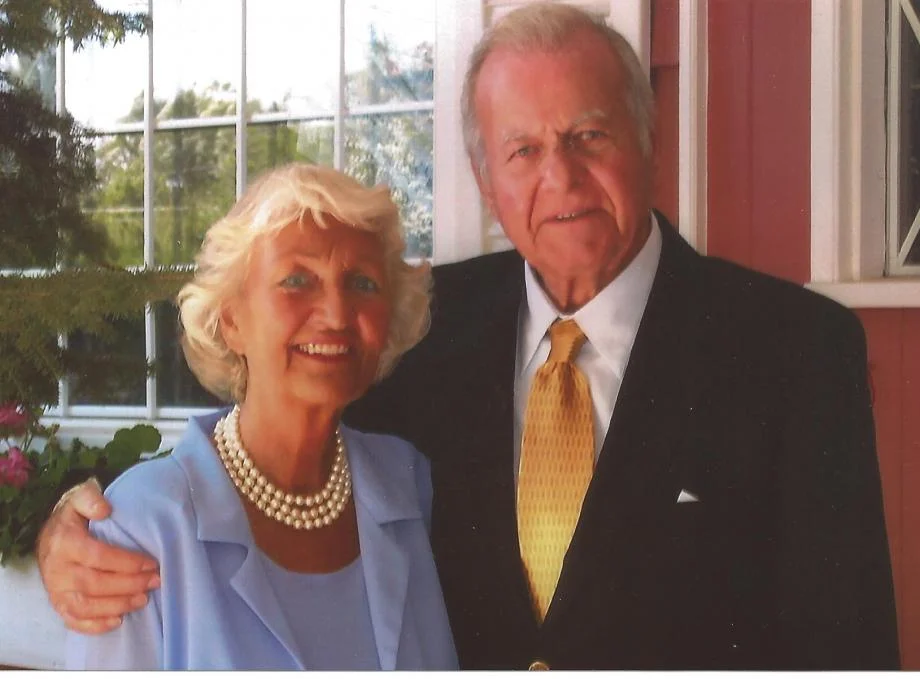
As we seek to unleash serving and disciple-making potential in others, we encounter people whose life scripts so beautifully and dramatically amplify the message God has placed on our hearts. Our lives were touched to the core in early 2014 when we met Erica Capri at the age of 80 ("and-a-half", she reminded us) in Spokane Valley, Washington, just eight months after the passing of her beloved husband Joe.

As we seek to unleash serving and disciple-making potential in others, we encounter people whose life scripts so beautifully and dramatically amplify the message God has placed on our hearts. Our lives were touched to the core in early 2014 when we met Erica Capri at the age of 80 ("and-a-half", she reminded us) in Spokane Valley, Washington, just eight months after the passing of her beloved husband Joe.
Although theirs was a marriage that began with love at first sight, it could have ended tragically if it were not for God's miraculous intervention. And because of another prayerful intervention as Joe reached the age of 70, countless other lives have been redeemed.
Click here to hear an audio version of Erica sharing her and Joe's story.
Joe's Story
by Erica Capri, as told to Wes & Judy Wick
I grew up as the daughter of a wealthy shipping magnate in Bremen, Germany. My home was formal and respectable. Although rich in the things of this world, I felt lonely and empty in my heart, learning that material things were not enough to fill this void.
While enjoying a game of tennis as a young adult, I met a foreign diplomat from America named Joe Capri, who was serving at the American Consulate in Bremen in post-World-War-II Germany. Our friendship grew, and we were soon united in matrimony.
My husband's position as a diplomat took us to new residences on several continents. By outside appearances our lives were interesting and glamorous. For the most part I was content to live in my husband's shadow as the wife of a respected diplomat. But over time, the glamour faded. An endless succession of cocktail parties helped lead Joe to alcohol addiction.
Our relationship deteriorated as alcoholism took its toll. It became so bad that I could no longer stand to live with Joe. We separated. I returned to Germany with the youngest of our three children while Joe was transferred to Sydney, Australia.

My Redemption
Feeling lost as a mother of three with a failed marriage, I became increasingly despondent and seriously contemplated suicide. At one of my lowest points I grabbed a Gideon Bible from my shelf, one that my daughter had taken from a hotel room in Bangkok, Thailand a couple years earlier. I had never opened the Bible before. It opened to the 23rd Psalm.
"The Lord is my Shepherd, I shall not want. He leads me besides the still waters. He restores my soul."
I had heard these words at funerals but hadn't realized they came from the Bible. I knew right then, though, that I needed a Shepherd, still waters, and restoration of my soul.
The Lord gave me an insatiable appetite for His Word, and I surrendered my life to Him after immersing myself in that miraculous Book. I did not know any Christians in Bremen. The Holy Spirit was my only teacher in those first six months. He alone helped me discover His unconditional love.
Joe's Redemption
Naturally I began praying in earnest for my estranged husband. I also asked that the Lord would change me too. One day in particular I prayed fervently for a break in Joe's bondage to alcohol. In the middle of those prayers the Lord blessed me with a reassuring sense of calmness.
At that precise time on the other side of the globe, Joe had his Scotch whiskey on his hotel dresser, getting ready to booze it up over the weekend. Miraculously, as he gripped the bottle, Joe had an encounter with the Lord, who told him to put the bottle down. Joe developed a sudden distaste for alcohol, and he poured the whiskey down the drain of his hotel sink.
Joe was delivered instantaneously from his alcohol addiction and was drawn into the loving embrace of Jesus. As we communicated long distance, I knew this was not just a ploy to win me back. It was the real deal. His life, like mine, had been redeemed by our loving Savior.
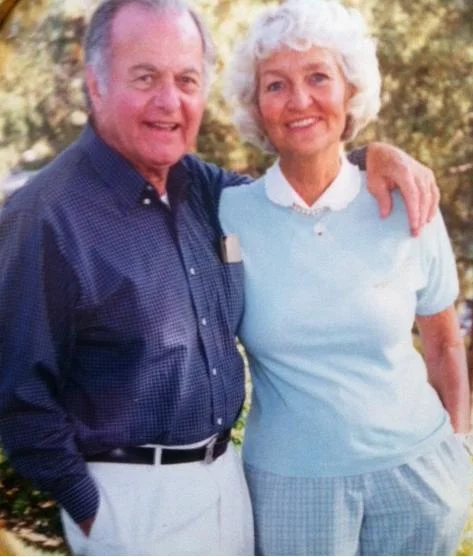
Restoration of Our Broken Marriage
Our marriage was restored, and we were re-united in Taiwan as Joe completed what turned out to be his final assignment as a foreign diplomat. He retired at the young age of 59.
Because our daughter was attending college in eastern Washington, we purchased a home in the Spokane area, where Joe and I lived for the next 30-plus years and where I continue to reside.
As new believers we committed ourselves to faithful study in the Word, prayer and church attendance. As a Christian delivered from alcohol abuse, Joe was infinitely more pleasant to live with. The Lord healed the pain of our past. Through God's gift of forgiveness our hearts were knitted together as one.
At the same time, though, Joe began to immerse himself in watching sports on television, particularly American football, one of the luxuries alluding him in his many years living overseas. He spent considerable time over the next decade, from age 60 to 70, sitting in his recliner, remote in hand, with his eyes glued to the TV.
I have to admit that I found his newly-adopted retirement lifestyle quite annoying. It was disappointing to see so many hours wasted as he settled into his personal comfort zone, far removed from action that really mattered. But he continued to grow in his knowledge of the Word and was eager to go to church whenever the doors were open. For that I was grateful.
Joe's Second Redemption
When Joe was 70 years old we had an evangelist, Deanne, staying in our home. One evening we hosted a Bible study with over twenty friends in attendance.
In the middle of the study Deanne sensed God was asking her to publicly share a particular word with Joe. Deanne disclosed that the word she received from the Lord was harsh and that she felt reluctant to share it. As a younger adult, a female and as a guest in the Capri home, she had plenty of reasons for being hesitant. And Joe was a feisty Italian, complete with all the machismo you might expect. But Deanne plowed ahead and asked Joe for permission to share the word the Lord had placed on her heart. Thankfully Joe gave Deanne the green light.
She then boldly shared this revelation:
"Joe, the Lord has impressed on my heart that you have made an idol of television and football. And if you're unwilling to get out of your recliner and serve Him, He will take you home."
Beyond the nerve it took for Deanne to share this bold word of warning, it took even more courage for Joe to receive this ultimatum with a teachable spirit. Joe was a very direct individual, and God knew that he could handle this stern admonition.
On the Monday morning following this weekend encounter, Joe placed a call to a friend who served at the Spokane County jail. He asked if he could become a volunteer through the chaplain's office. They assured him that there was both a need and an open door. He went through preliminary training and began serving. As he continued to serve, he pursued his ministerial credentials and eventually became the assistant chaplain at the jail, going there faithfully five days a week.
Joe's life had been turned right-side-up, and the inmates loved Joe's sincerity, discernment, and direct approach.
One after another, God used Joe to help turn men's hearts to Christ. He also shared with female inmates. Early on he prayed he would live long enough for a thousand souls to turn to Jesus. He kept a running log of names. When the total number of salvations reached a thousand, he asked the Lord for another thousand.
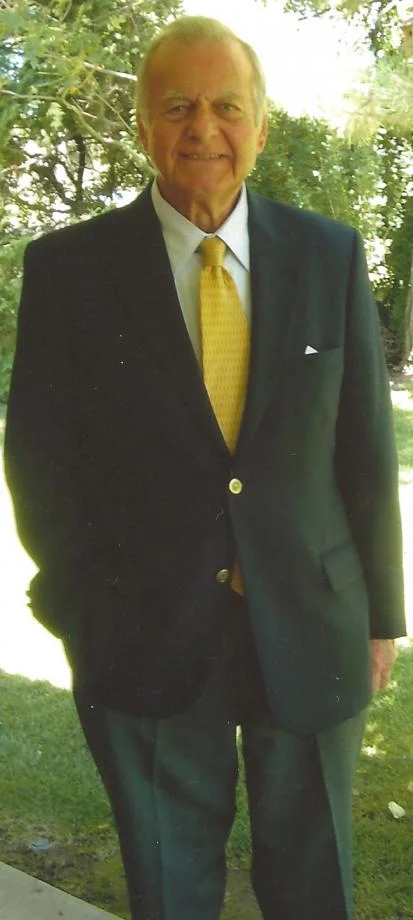
Because of his work as a foreign diplomat, Joe was fluent in four languages, which proved to be a huge asset in the jails. And because he knew firsthand Christ's power to deliver from addiction, he could find common ground quickly.
He could also sense when he was being played. Joe gave Bibles to the men who invited Christ into their hearts. Later he helped many of them secure glasses to help with their reading. When some men wanted to just exploit the vision care, he would call them on it. "You're not yet earnest about your faith. You just want free glasses. Get serious about Jesus and your walk with Him, and then come and see me for glasses."
Many times he entered the jail lobby shouting loudly with a smile, "Somebody give me a box! I feel a sermon coming on!" He would then proceed to share a message from his heart.
Some of the more hardened and dangerous criminals were on the sixth floor. Most volunteers were afraid to enter these cells. But Joe pushed his fears aside and never bothered looking at anyone's rap sheet, entering these cells alone with the steel-barred door locking behind him. Many of these intimidating men also surrendered their lives to Jesus, and their lives were transformed.
One by one and sometimes in groups, more and more men and women gave their hearts to Christ. At the age of 88 Joe had a stroke and was confined to a wheelchair. With the assistance of friends he continued visiting the jail for another two years, always looking for opportunities to lead others to Christ.
After Joe's death last May, the chaplains and I reviewed Joe's monthly logs, which listed by name and date the men and women he was privileged to lead to Christ. Some months more than eighty names were documented. In other months tallies were in the thirties.
The years piled up and so did the number of inmates who came to know Jesus. A final tally found JUST OVER TEN THOUSAND names documented during Joe's twenty years of jail ministry, from age seventy to ninety!
While some seed no doubt fell on hardened soil that never fully took root, thousands of lives were impacted by Joe's faithful proclamation of the Good News of Jesus. And many of these converts have gone on to lead many others to Christ.
Now, as I push through the pain of grief in losing my best friend, I know there are more lives to touch with the redeeming power of Jesus. This redemption can bring eternal life, break through addiction, mend broken hearts, restore marriages, light a fire under complacent Christians, and touch the most incorrigible of criminals.
As I pass the one-year anniversary of Joe's passing, I am challenged to stir up the gifts within me and ask the Lord, "What's next?" Now in my ninth decade of life, I still want to make a difference.
And perhaps by hearing Joe's testimony, you too will be inspired to break away from your TV or from whatever else might hold you captive---and step out in faith as a willing vessel of Christ.

Yonderville
Written by Mark Delaney
I find books, videos, studies, and peer interaction to be enjoyable and highly beneficial. They serve a great purpose. However, I think we MUST empower by seeking out and finding the o’er yonder, been-there-done-that, seasoned followers of Christ.
Written by Mark Delaney

Mark Delaney, Children’s Pastor at Valley Assembly in Spokane Valley, Washington, has actively been involved in children's ministry leadership since 2004. His passion is to empower children and families to seek God constantly, serve Him faithfully, and share Him boldly.
When my family and I moved to Georgia a few years ago we were quickly introduced to a town called ‘Yonderville’.
Yonderville is the wide open expanse that lies in between two “real” towns. This isn’t a town you’ll find on any map or locate with a GPS, but the locals all know right where it is. (Apparently to qualify as a real town you must have a Wal-Mart and a McDonalds.)
My family was kindly invited to the home of a couple who lived in this uncharted town.
“Thank you, Sir and Ma’am. Where do you live?” I knew I was in for a wild ride when they began detailing local scenery. Before I could jump in, directions were in full swing.
“Well, we live 20 minutes o’er yonder. Once you get off Highway 35, go past the gas station, then over the train tracks. You’ll take a right at the blue fence and another right at the BIG oak tree next to the creek. Follow the road where the creek turns and when you see the old red tractor on the left, you’re almost there. Our house will be on the right. It’s the one with the electrical box in the yard and white rockers out on the front porch.”

With wide-eye confusion I felt my jaw drop slightly. Didn’t these people understand I have a phone that talks to me and tells me exactly where to go?! All I needed was a simple address---not some random list of mile markers and roadside attractions. So I did what any good city person would do, I took out my smart phone and asked for their address. I was given their street number, along with their phone number thrown in for good measure.
A few days later I loaded my family into the car, pulled up their address in my phone and headed out. Things seemed fine until I realized we had been driving for about thirty minutes. While I didn’t recall any of their backwoods directions, I distinctly remembered being told they lived just twenty minutes away.
My phone said I was still ten minutes from my destination. It then hit me that I was lost in a land with nothing but open roads and peanut farms. (Apparently even Google doesn't understand the intricacies of visiting the town of Yonderville!)

I had their phone number but, of course, couldn't as a man bring myself to dial and ask for help. Luckily, just ahead I spotted a porcelain gas sign just above the tree line. I pulled into the station, showed the address to the attendant inside, and asked if he knew how to get there.
That’s when I learned my second lesson about the uncharted town of Yonderville. Anyone who lives in this wide-open expanse can usually tell you how to get ANYWHERE in their far-reaching town.
Again I was given directions laden with colors, trees and buildings, but this time I took detailed notes. I got back in the car and followed directions exactly as they were given to me. Before long I saw a green electrical box and white rockers on the porch. My stubbornness and know-it-all attitude got us there late, but we successfully arrived at our destination.
The next time I was invited to a home in Yonderville I wrote down the list of vivid directions, following them word for word. (I arrived on time and only got lost once briefly when I drove past the boiled peanut stand instead of turning right.) Eventually I learned an even better method was simply to get in my car and follow behind a local who knew how to get my Yonderville destination. That was a surefire way of not getting lost.
I’ve also learned that life is full of trips to the town of “Yonderville”. . . times in life when you’re confused, a little lost and not sure which direction to take. It happens to
- High school seniors trying to make sense of what’s ahead
- Newlywed couples not quite sure how to actually “do” life together
- Parents trying to discover how to properly raise their children
- Families facing the stress of moving or losing a job
- Longer term spouses struggling to maintain their relationship now that their lives are overscheduled and full of stress
There are countless other examples, but we’ve all been in those places in life where we seem stranded. Being lost isn’t a comfortable feeling, as we try to quickly figure out how to get back on track. So we read the latest and greatest books, and we listen to seminars and sermons from tremendous speakers. We meet with others dealing with similar issues and seek advice from our peers.
These things can help, but when we’re in the Yondervilles of life, I’ve learned we need to pray and ask God to lead us to someone more seasoned who knows their way around. This is the Biblical model of discipleship that God wants us to live out. One generation speaking into the next, with each getting stronger in return. “We will tell the next generation the praiseworthy deeds of the Lord, His power and the wonders He has done.” Psalm 78:4
God has gifted most churches with seasoned veterans of the faith. They meet regularly in groups with names like “rock of agers”, “over 50’s”, and “prime timers”. Many times those younger see them as great people but just a little out of touch. They shut them off the same way I treated the person who began giving me directions that sounded like they were sending me on a Tom Sawyer adventure.
But these long-time followers of Christ have learned how to get around the countryside in life’sYonderville frustrations. They possess the ability to share how, with God’s help, you can arrive at your destination successfully. Allowing them to speak Godly advice into your life is more powerful than any new book or video.
Intergenerational ministry is a Biblical model that is far more successful than simply relying on your peer group for advice. I wouldn’t trust my phone, Google maps or another city person to provide the best directions to help me find my way around the countryside. The best way is to get in the car and follow right behind someone who has been there many times before.
I find books, videos, studies, and peer interaction to be enjoyable and highly beneficial. They serve a great purpose. However, I think we MUST empower by seeking out and finding the o’er yonder, been-there-done-that, seasoned followers of Christ.
You may have to listen more attentively, take notes and slow life down a bit, but their advice is well worth it. You’ll find some great direction from the gentleman with the gray hair. He’s sitting just behind the guy with the dark glasses in the third row from the front of the stage, ‘just o’er yonder.’